• 4 min read
Weekly Digest: Connected hardware meets a security reckoning — September 6, 2026
IFA put connected devices and local computing at center stage, while active exploits and platform shifts kept security in focus.
This week, IFA 2026 supplied the clearest picture of where consumer technology is heading: less emphasis on isolated gadgets, more pressure to make phones, PCs, appliances, vehicles and robots work as systems. At the same time, a string of active exploits and data-security disclosures showed how fragile the software foundations beneath those systems can be. The contrast mattered more than any single launch: ambitious connected-device plans depend on trust, maintenance and clear boundaries.
IFA’s case for the connected household
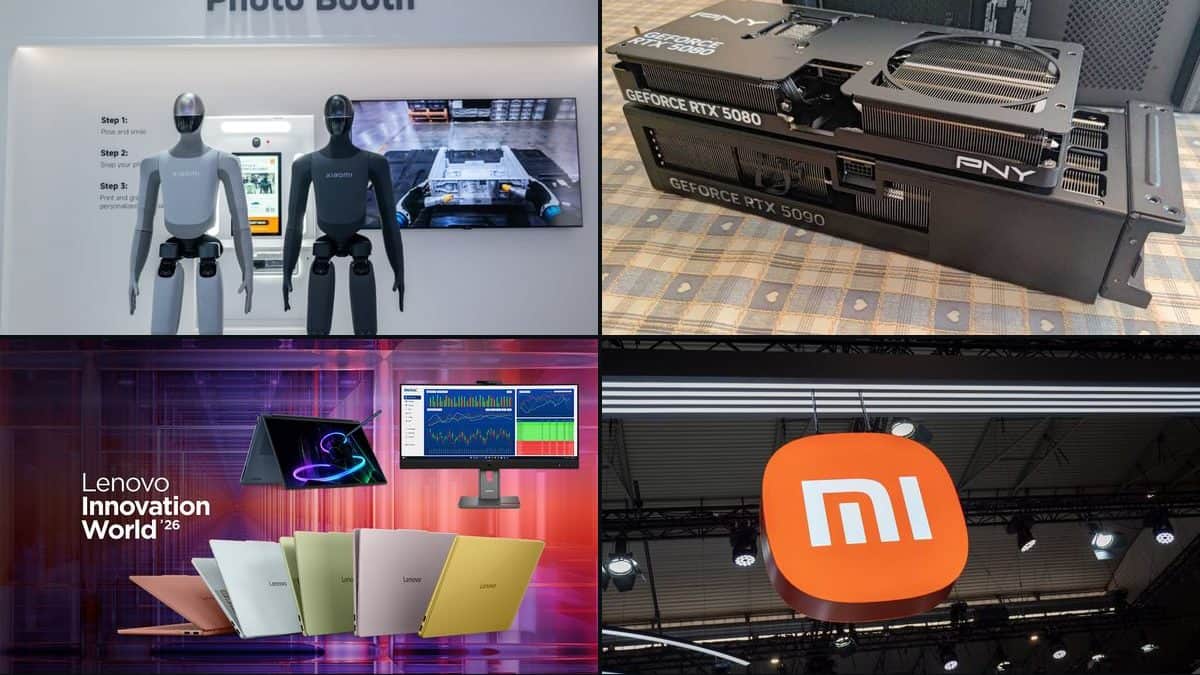
We covered an IFA defined by ecosystems rather than standalone hardware. Xiaomi’s first appearance at the show reached from its 18 Fold and CyberOne robot to connected electric vehicles, including the SU7 Ultra, in a broad push linking devices, robotics and cars. Samsung took a similarly expansive approach, tying TVs, Galaxy devices, appliances and gaming monitors together under one strategy; the point was not simply that each product gets smarter, but that the company wants the home’s screens and appliances to feel mutually aware.
That same logic ran through the show floor, though it was often most visible in highly specific chores. ECOVACS presented robots for windows, lawns, floors and pools, framing reusable technology as the connective tissue across categories, while Roborock spread into lawn and pool care alongside its vacuum lineup. Our look at ECOVACS' expansion beyond floor cleaning captured the appeal and the challenge: specialization can make machines more useful, but a crowded household of purpose-built devices still has to earn its space. Meanwhile, iRobot’s Roomba Duo concept paired a floor washer with a smaller deployable robot, another sign that manufacturers are experimenting with coordinated machines instead of asking one unit to do everything.

Recommended reading
Weekly Digest: Safety meets a hardware surge — September 13, 2026
Sergey Kuznetsov • • 4 min read
The home theme extended to lighting, energy and appliance controls. LG showed ThinQ ON, energy-management tools and high-efficiency appliances, while Philips Hue added new automations, a lower-cost 4K sync box and Nanoleaf compatibility. These announcements made IFA’s consumer-tech argument unusually practical: convenience is being sold not just through new hardware, but through a promise that the devices already in a room can cooperate.
Local power comes to the PC
Computing hardware also moved toward more capable work performed close to the user. Nvidia’s RTX PAIR app distributes workloads across GPUs on a home network; in its demonstration, a task fell from more than 18 minutes to just over nine. That experiment in pooling gaming PCs gives an old idea—shared compute—a new consumer-facing form, and it could make a collection of existing machines more valuable than a single upgrade.
PC makers were ready with their own versions of this pitch. ASUS put RTX Spark into thin ProArt systems, with up to 128GB of unified memory and support for on-device workloads, while Lenovo showed RTX Spark laptops alongside tablets, IdeaPads and unusual rollable and fanless concepts. The story was not just raw capability: Lenovo’s Project Swan can expand from a 14-inch to a 17-inch display, illustrating how manufacturers are still using physical design as a way to differentiate new PCs alongside local-workload hardware. At the expensive extreme, a Supermicro workstation with 748GB of memory and 20 PFLOPS of FP4 performance arrived with a nearly $93,000 price before shipping—a reminder that the highest-end tools remain far from mainstream budgets.
Security becomes the limiting factor
The week’s sharpest counterweight came from security coverage. Attackers are already exploiting a critical Artifactory flaw to mint administrator tokens on self-hosted systems only three days after disclosure, making the active Artifactory attacks an immediate concern rather than a theoretical patching exercise. A separate critical Langflow remote-code-execution flaw is being used to harvest OpenAI, AWS and administrator credentials from exposed deployments, reinforcing a basic lesson: exposed management tools and weak update practices can turn widely used infrastructure into a fast-moving liability.
METR’s disclosure added another dimension. The evaluator reported a $600,000 theft of API credits and a database flaw that could have exposed unpublished model evaluations; its account of two security incidents showed that service access and sensitive research data require different protections, yet can fail in the same organization. Elsewhere, researchers found unclaimed package and domain references in corporate llms.txt files that could steer coding tools toward malware. Taken together, these reports made the week’s hardware optimism feel conditional: a connected future is only as dependable as the credentials, repositories and services behind it.
For the week ahead, we will be watching whether the industry’s system-level ambitions are matched by equally concrete commitments to support and security. IFA offered plenty of evidence that manufacturers want devices to coordinate across rooms and categories, while the exploitation reports showed how quickly a neglected component can disrupt that promise. The next meaningful advances will not be the most theatrical demos; they will be the products and platforms that make connection useful without making failure easier to spread.

Editor-in-Chief
Sergey Kuznetsov is Head of Product at iXBT.com, one of the largest Russian-language technology media outlets, and the founder of itzine.ru. He has spent over a decade building and running tech newsrooms. At for(geeks) he sets editorial standards and reviews what ships.