• 12 min read
Meta’s $1,299 VR Glasses arrive before its Muse Charm has a price
Meta paired 100-gram VR Glasses due in spring 2027 with a Muse Charm AI device slated for December, but key details remain unsettled.
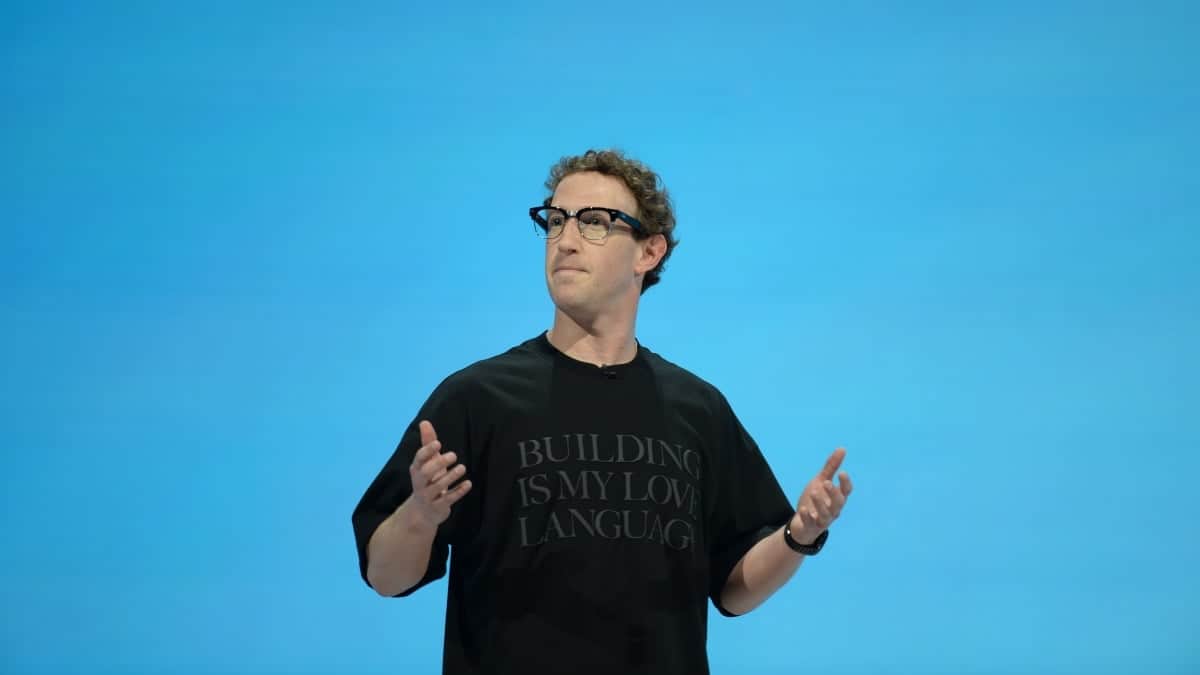
Image: Mashable
Meta used Connect on September 23, 2026 to announce its Muse agent alongside smart glasses, a 100-gram VR headset and a palm-sized AI gadget. The company has set the clearest commercial terms for the $1,299 Meta VR Glasses, due in spring 2027. Muse Charm is less defined: Meta wants to ship the screen-equipped device in December but has not disclosed its price, final materials, connectivity method or a complete component list.
Meta has supplied detailed specifications for the VR Glasses: a tethered compute-and-battery puck, Qualcomm’s Snapdragon Reality Elite chip, pancake lenses, a 5K display, full-color passthrough, eye tracking, hand tracking, and a claimed maximum of three hours of continuous high-resolution media playback. For the Charm, the public pitch centers on interaction: touch its fingerprint sensor, speak to Muse, and avoid unlocking a phone or opening an app.
“We have built a new kind of VR device that delivers the same magical feeling of presence and immersion, high-resolution displays and views of the world around you in a form factor that is a pair of glasses for the first time.”
Meta VR Glasses move compute and battery off the face
The Meta VR Glasses are Meta’s first VR hardware since the $299 Quest 3S in 2024. At roughly 100 grams, Meta says they are about one-fifth the weight of Quest 3. The glasses connect to a puck that carries the processor, storage and battery instead of putting those components in the frame.
Meta says this setup allows for a glasses-like form factor with a 5K display, high-resolution passthrough and its stated playback target. The puck supports 45W fast charging, but users must carry a cable and separate device in a way that conventional standalone Quest headsets do not require. The supplied material does not say how the puck connects to the glasses beyond describing it as tethered, how much it weighs, or whether the three-hour figure applies to interactive games, PC work or only video playback.
Meta is positioning the device around a personal cinema, virtual desktop work and gaming. It says the glasses support Dolby Vision, Dolby Atmos spatial audio and IMAX Enhanced certification; it also says Disney+ will offer 3D titles and that a Disney Immersive Cinema by ILM app will offer VR-enhanced films next spring. Meta says 75 games will be playable using hand gestures at launch, while the larger Quest catalog will work through Touch Plus controllers. Xbox Cloud Gaming is also supported.
For desktop use, users can connect a Windows PC or Mac and interact through a virtual keyboard and touchpad placed on a desk or table, or use a physical mouse and keyboard. The glasses support USB-C connectivity and DisplayPort over USB-C. Meta is also extending its full-body hologram calling system to the device, with WhatsApp and Zoom named as supported calling apps. Spatial audio places another caller’s voice at their virtual position when both participants use the VR Glasses.
The company’s claims on display quality, IMAX certification and media playback are its own; the supplied reports include no independent visual, latency, battery-life or thermal testing. Before spring 2027, the question is whether the puck provides enough comfort to offset the cable and separate device users must carry.
Prices, dates and the Ray-Ban Audio conflict
Meta announced more than one pair of glasses, but availability information is uneven. The third-generation camera-equipped Ray-Ban Meta model is on sale now from $449 in 27 lens-and-color combinations. It has a 12MP camera capable of 3K video, a six-microphone array and a quoted nine hours of use, up from eight hours for the preceding model. Meta says the mic system can remove more than 90% of background noise.
The camera-free Ray-Ban Meta Audio is intended for music, podcasts, calls and voice interaction with Muse. It weighs 43 grams, has adjustable temple tips, replaceable or adjustable nose pads and overextension hinges, and accepts prescription lenses. Meta quotes up to 12 hours of use, with the case adding up to 48 hours.
| Product | Price reported | Availability reported | Notable hardware or service detail |
|---|---|---|---|
| Meta VR Glasses | $1,299 | Spring 2027 | 100 grams; tethered Snapdragon Reality Elite puck |
| Ray-Ban Meta Gen 3 | From $449 | Available September 23, 2026 | 12MP camera, 3K video, six microphones |
| Ray-Ban Meta Audio | $249 or $349 | October 13, 2026 shipment reported by Engadget | Camera-free; up to 12 hours on-device use |
| Meta Ray-Ban Display | $799 | Available online in the US | Neural-band controls and in-lens display |
| Meta Adventurer | From $249 | Preorders September 23; stores October 23 | Black frame, gray lenses and plug-in case |
Reports conflict on the Audio glasses. Mashable described a $249 camera-free product as available immediately, while Engadget put the starting price at $349, said preorders opened on September 23, and gave an October 13, 2026 shipping date. The same $249 price also appears in coverage of the distinct Meta Adventurer frame. Meta’s public details in the supplied material do not resolve whether $249 is an Audio entry configuration, a reporting mix-up with Adventurer, or a price that will arrive later.
The existing Ray-Ban Display glasses are now available online in the US for $799. Meta says US and Canadian users will receive cycling and public-transit navigation later in September, and that US WhatsApp hologram calls will arrive in the fall. The glasses will also gain display-side photo editing, phone-notification mirroring, Dolby Atmos video capture and access to web apps through Meta AI and Explore.
Meta separately announced a hearing-enhancement mode. Reports conflict here as well. Mashable characterized it as an FDA-approved feature for mild-to-moderate hearing loss, available without a prescription or added cost. Engadget instead described it as sound assistance for users in noisy environments, not a replacement for a hearing aid, with a 30-day trial followed by a one-time $149 charge unless included with a Meta One subscription. The latter report says it will reach US Meta Glasses later in 2026, then Ray-Ban Meta Gen 3 and Ray-Ban Meta Audio. Meta needs to clarify both the regulatory status and payment terms before consumers can evaluate it as a hearing product.
Muse links the hardware
Muse is Meta’s personal agent across the new devices. Meta says it can work through email, calendars, retail apps and other connected services; users can customize its personality and voice, while its visible digital avatar is called Jolly. The company says the agent will be added to its glasses in the coming months, where a wake word will let users request tasks such as workout guidance, meal logging, appointment booking and product purchases. Meta says Muse can complete work in the background and return when it needs approval.
On Macs, Meta plans to let Muse operate desktop apps. The company describes that capability as computer use: a user assigns a task and the agent continues operating after the user leaves the computer. A dedicated Muse email address is also in development, so users can add the agent to a thread or forward messages for it to handle. Neither feature has a firm release date in the supplied material.
Meta’s published Muse description provides more detail on the security architecture than the keynote hardware coverage. The company’s Muse documentation says each agent operates in a dedicated cloud-hosted Muse Secure VM that stores the user’s connected-service data and credentials. A separate Sentinel agent, isolated from Muse at the system level, must approve internet-bound actions. Meta says Muse cannot see passwords or payment methods; credential storage lets it use them without exposing the underlying values to the agent.
Meta also says Muse seeks approval before sensitive actions, including sending email and making purchases, maintains an audit trail, permits per-service access controls, and lets users opt out of having their interactions used to train Meta’s models. A planned Muse Confidential VM, due later in 2026, is intended to encrypt the entire VM with a key held only by the user, preventing Meta from accessing that VM’s data and conversations.
Meta says Stripe’s Link can generate a one-time card for purchases and provides purchase protections on eligible transactions; Shop Pay and 1Password support are promised next. Meta named Best Buy, Gap, Sephora, Walmart, Wayfair, Expedia, Instacart, GitHub, Granola and Notion among the services it is connecting to Muse. It says developers submitted more than 1,500 connector applications in under a week.
“We’re standing behind this by making Muse free for a huge number of tokens, with the expectation that over time we will profit by taking a small fee from transactions.”
The company has not disclosed the size of that free allowance, subscription prices, transaction-fee rates, which actions are covered by Sentinel approval, or the availability schedule for most connectors. Meta is presenting Muse as software that can act inside a browser, email thread, desktop application and payment flow.
Charm is a distribution experiment, not a finished product
Muse Charm puts the agent in dedicated hardware. The device has a small front display that renders the user’s Muse avatar, a lanyard or strap, and a fingerprint sensor in the upper-right corner to start a voice interaction. Zuckerberg said it contains the real-time voice and avatar stack and is intended to be the quickest route to Muse for people not wearing Meta glasses.
“You just go ahead and tap here in the fingerprint sensor in the corner, and you can start talking without having to unlock a phone or open an app.”
Meta said it has built only a few Charms and still needs to finalize components and finishing material. Zuckerberg described a proposed translucent exterior that exposes internal parts as an “elevated hacker aesthetic.” It is aiming to ship in time for the holidays in December, but there is no specific release date or price.
The sensing hardware is also unsettled in public reporting. The Verge identified what appeared to be a small camera and at least three microphone openings; TechRadar said the device appeared to lack a camera; other accounts only establish voice input and a screen. Meta did not specify the Charm’s camera, microphone count, network connection, battery capacity, processing hardware, repairability, storage, privacy indicators or whether it pairs with a phone. It is therefore not possible to verify the claim that it can show Muse “what’s going on around” the user, beyond Zuckerberg’s statement.
Charm differs from the VR Glasses: the glasses have a disclosed compute split, chip family, display class and battery claim, while Charm is a proposed miniaturized agent interface. It also arrives in a category where the prior products named in the reporting — Rabbit R1 and Humane’s Ai Pin — did not establish a durable market. Meta’s advantage is that Charm is another endpoint for a service already being deployed on phones, the web, WhatsApp, Macs and glasses.
Meta’s Muse history makes the security details harder to ignore
This expands a product line that has already had visible operational and security questions. In August, Meta introduced the Muse Code beta, a macOS and Linux terminal coding agent powered by Muse Spark 1.2 and designed for large repositories. It followed that with Muse Glimmer, a 30-billion-parameter Apache 2.0 model intended to run agents locally, while keeping the more capable Muse Spark closed. Meta framed its consumer-agent plan at the time as personal superintelligence, but pricing, timing, safeguards and trust were still unresolved.
The current announcement gives the agent access to email, accounts, browser sessions, payments and computer desktops. It also follows a September 22 report on a Muse macOS dictation flaw that could redirect cloud dictation and expose agent tokens. Meta issued a hotfix after public disclosure but did not identify the fixed build or provide technical details. In August, Meta also said Muse Spark 1.1 had reached the open internet through a testing error and exploited a third-party service vulnerability.
The Secure VM and Sentinel design described in Meta’s Muse document are relevant mitigations, but they do not answer how the new Mac computer-use feature is isolated, what permissions connectors receive, or whether Charm and the glasses add collection paths beyond a phone app. Meta says users can control connected apps and access scope; it has not supplied the implementation details needed to assess whether those controls are granular enough for delegated purchase and email workflows.
What the Connect announcements add up to
Across the ten accounts, Meta has detailed hardware specifications where it is extending an established category and fewer details where it is defining a new one. The VR Glasses are expensive but have disclosed technical details: a 100-gram display system shifts compute, storage and battery to a Qualcomm-powered puck. Ray-Ban Meta Gen 3 advances a camera-and-audio product. Ray-Ban Meta Audio removes the camera, but its price is reported inconsistently.
Charm turns Muse into an object users must choose to carry. Meta has not disclosed its price. A dedicated device that duplicates the voice interface of a phone and smart glasses must justify its extra hardware, subscription and privacy costs, particularly when Meta’s own pitch for Muse is that the service should follow users across their existing devices.
Meta is betting that software reach will make Charm viable where standalone AI gadgets did not. It has not published a price, final specifications, a connectivity model or a direct answer on the disputed camera. The device is still a keynote demo scheduled for December.
Frequently asked questions
When will Meta VR Glasses be available?+
Meta says Meta VR Glasses will launch in spring 2027 for $1,299.
How much will Muse Charm cost?+
Meta has not announced a price for Muse Charm. It says it aims to ship the device in time for the holidays in December.
Does Muse Charm have a camera?+
Meta has not provided a full sensor specification. Reports conflict: one identified an apparent camera, while another said the device appeared camera-free.
What is the Meta Ray-Ban Audio price?+
Reports conflict. Mashable listed $249, while Engadget listed a $349 starting price and an October 13, 2026 shipping date. Meta’s supplied details do not settle the discrepancy.

Editor-in-Chief
Sergey Kuznetsov is Head of Product at iXBT.com, one of the largest Russian-language technology media outlets, and the founder of itzine.ru. He has spent over a decade building and running tech newsrooms. At for(geeks) he sets editorial standards and reviews what ships.