• Updated • 6 min read
Apple Watch Series 12 and Health app add readiness and longevity
Announced at Apple Event 2026, the redesigned Health app adds AI guidance, readiness scoring, longevity metrics and a $119 Quest blood panel.
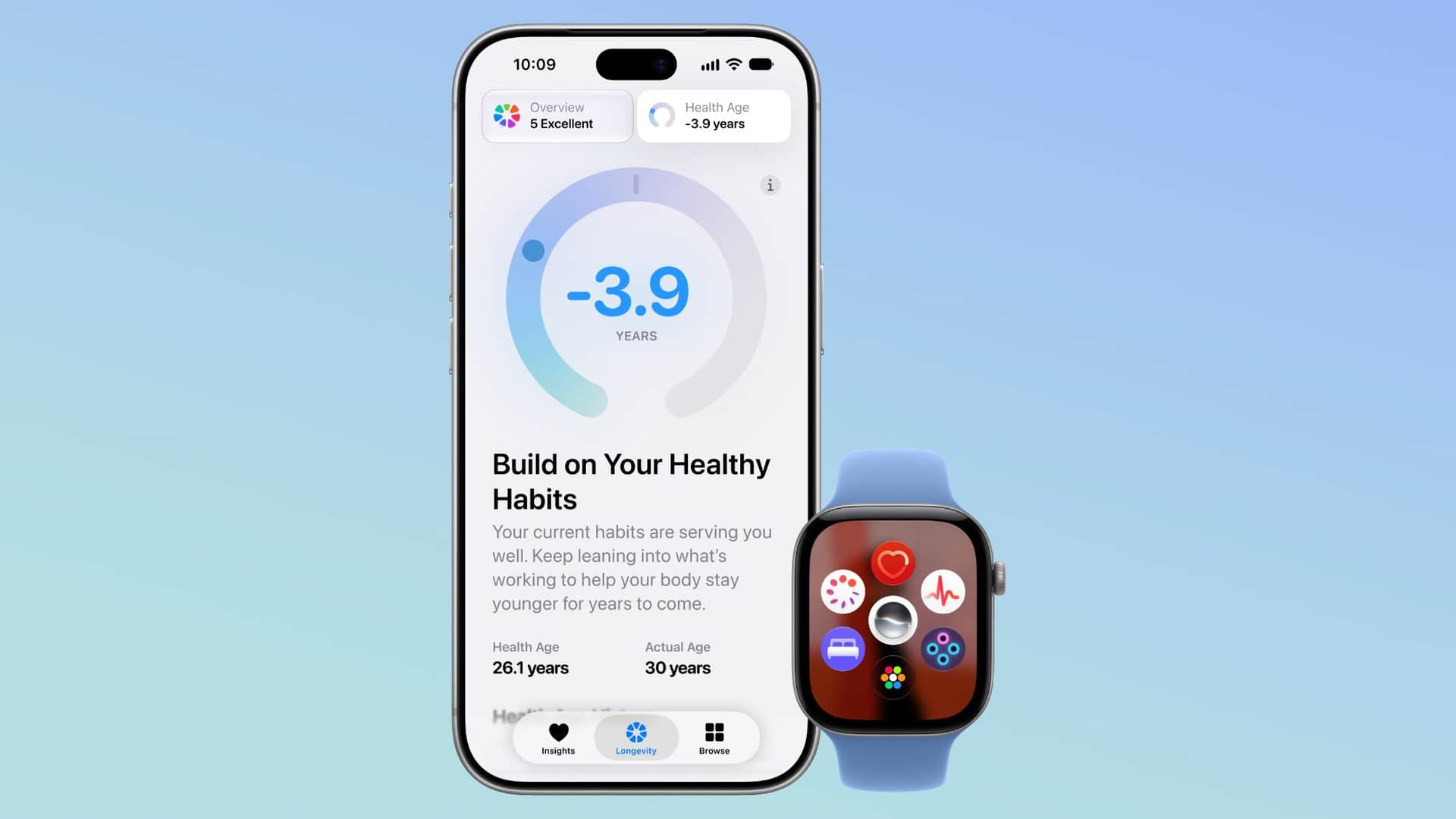
Image: MacRumors
Apple is rebuilding the Health app around the sensors in the Apple Watch Series 12 and Apple Watch Ultra 4, adding Apple Intelligence-generated guidance, a readiness score, longevity analysis and at-home movement evaluations. The changes were announced at Apple Event 2026 on September 9, 2026, alongside the new iPhone and Apple Watch models.
The updated app is scheduled to arrive in late 2026. Apple has not provided a specific release date. It will launch in U.S. English, with additional languages planned to follow.
The redesign depends partly on a new Health Sensing System in the watches. Apple says the system increases the electrode surface area used for ECG readings, arranges photodiodes in a ring to capture light more efficiently for optical sensing, and uses power-efficient green LEDs for continuous heart-rate data. The watches take heart-rate readings every five seconds throughout the day and measure heart-rate variability, or HRV, more frequently.
Apple says a head-to-head study using an ECG chest strap as the reference found that the new Apple Watch had the most accurate heart-rate sensing among the wearables tested. The company did not provide the study’s sample size, test protocol or numerical accuracy results in the supplied announcement, so the claim cannot yet be evaluated from the reported figures alone.

Recommended reading
Luna Ultra reaches 15× zoom, but 4K vertical tops out at 6×
Sergey Kuznetsov • • 6 min read
What the redesigned Health app does
The redesigned app adds an Insights tab that uses Apple Intelligence to summarize timely health information, such as new sleep metrics or a peak in VO2 max. Its Personal Guidance area is intended to turn those measurements into suggestions tailored to a user’s data. Apple gives interval training during a morning run as an example for someone working on cardio.
The app will also add a readiness score from 0 to 10. It combines recent activity, vital signs and sleep score, then classifies the result with labels including “Recover,” “Pace Yourself,” “Ready” and “Go For It.” The score and recommendations will appear on the watch, in the Fitness app and in the Health app’s Insights tab.
Vitals will gain separate overnight and daytime views, with both overall HRV and recovery HRV incorporated into the display. The Fitness information in Insights will update throughout the day as new activity data arrives.
A new Longevity tab expands the app beyond individual readings. It assesses heart health, sleep, mental well-being, movement health, metabolic health, hearing and nutrition, then shows how each area compares with current clinical guidance. Apple also plans a Health Age metric that uses VO2 max, resting heart rate, HRV, sleep and blood-work biomarkers to compare a user’s health metrics with their actual age.
The app will support manually uploaded lab results and synchronized medical records. Apple says the data can help users identify which habits have the greatest effect on their health, but it has not described a clinical validation process for the Health Age calculation or explained how conflicting, missing or outdated measurements are handled.
The new Health app’s access rules depend on software support and watch-specific sensing. An Apple Intelligence-capable iPhone is required for the updated app, while the readiness and higher-frequency heart-rate and HRV features require one of the two new watches.
| Health app capability | Required hardware or account access |
|---|---|
| Redesigned Health app and Apple Intelligence guidance | Apple Intelligence-capable iPhone |
| Readiness score | Apple Watch Series 12 or Apple Watch Ultra 4 |
| More frequent heart-rate readings | Apple Watch Series 12 or Apple Watch Ultra 4 |
| More frequent HRV readings | Apple Watch Series 12 or Apple Watch Ultra 4 |
| Lab-result uploads and medical-record syncing | Supported Health app account data; specific limits not given |
Quest blood testing adds a $119 purchase
For U.S. users who want more data for Longevity and Health Age, Apple is partnering with Quest to sell a full bloodwork panel inside the Health app. The panel costs $119 and covers more than 50 biomarkers. It isn’t available in the app yet, and Apple has not published the complete list of tests.
The purchase still requires an in-person visit to a Quest lab. After testing, the results are combined with Apple Watch data and analyzed on the iPhone. Apple says users will receive videos from clinical experts related to their results.
Quest describes the panel as covering preventive-health insights, cardiometabolic health and organ function. The reported package also includes biometric readings for blood pressure, height, weight, and waist and hip circumference. Quest has approximately 2,000 locations across the U.S., so using the service requires a visit to a physical location.
The price is higher than a comparable option mentioned in the report: Oura’s Quest test costs $99, checks more than 50 biomarkers and is sometimes discounted. The two offerings are not necessarily identical—the full contents of Apple’s panel remain unpublished—so the prices should not be treated as a direct like-for-like comparison.
| Quest testing option | Reported price | Reported scope |
|---|---|---|
| Apple Health and Quest panel | $119 | More than 50 biomarkers; full list not yet published |
| Oura and Quest test | $99 | More than 50 biomarkers; discounts may apply |
Apple’s model also makes the Health app a gateway to a paid, offline medical service. The app can aggregate records users already have, but the new panel introduces a separate purchase and a required lab visit rather than collecting every measurement through the iPhone or watch.
Movement tests and cycle tracking
The redesigned app will add at-home assessments for VO2 max, flexibility, strength, balance and movement mechanics. For the VO2 max test, the iPhone camera tracks a user as they follow instructions from a trainer. The app provides real-time audio and visual feedback and generates an exercise plan after the assessment.
Apple says the tests run on the device, with no video recorded or stored. They are designed to show how a user’s body is moving and to track progress while recovering from an injury. The company has not specified which iPhone models support the camera-based assessments or provided accuracy figures against clinical tests.
Cycle Tracking will add support for perimenopause and menopause. The supplied announcement does not specify which new watch sensors, if any, are required for those features.
Compatibility and what is still missing
Owners of an Apple Intelligence-capable iPhone should receive the updated Health app when it launches, but the new measurement features are tied to the Apple Watch Series 12 and Ultra 4. The software redesign will reach qualifying iPhone users, while the higher-frequency sensing and readiness score require new watch hardware.
Apple has supplied broad feature descriptions but few implementation details. It has not announced the exact late-2026 release date, a complete list of supported iPhone models, the full Quest biomarker panel, the clinical methodology behind Health Age, or independent numerical results for the heart-rate comparison. The app’s readiness recommendations, health-age comparisons and AI-generated guidance depend on how the underlying measurements are validated and interpreted.
Update, 22 September 2026 — Ambient audio adds Rewind and Recap
TechXplore reports that the latest Apple Watch models can listen to surrounding sound throughout the day, transcribe a preceding 15-second snippet through a feature called Live Rewind, and create later on-device summaries through Siri Recap. The report says Live Rewind signals its use with a chime, animation and microphone indicator, while Siri Recap does not provide the same notice.
According to TechXplore, Apple says the audio is not recorded or stored, is not attributed to speakers, and is encrypted. The report also says the features use Private Cloud Compute, whose servers retain no logs after returning a response; Apple has said it will publish the software used by each instance for independent review.
Frequently asked questions
When will Apple’s redesigned Health app launch?+
Apple says it will arrive in late 2026, but it has not announced a specific release date. It will launch in U.S. English, with more languages to follow.
How much does Apple’s Quest blood panel cost?+
The panel costs $119, covers more than 50 biomarkers and requires an in-person visit to a Quest lab. The full test list has not been published.
Which Apple Watches support the new readiness score?+
The readiness score and more frequent heart-rate and HRV readings require the Apple Watch Series 12 or Apple Watch Ultra 4.
Does the new Health app store video from movement tests?+
Apple says the movement assessments run on the device and do not record or store video.

Editor-in-Chief
Sergey Kuznetsov is Head of Product at iXBT.com, one of the largest Russian-language technology media outlets, and the founder of itzine.ru. He has spent over a decade building and running tech newsrooms. At for(geeks) he sets editorial standards and reviews what ships.