• 9 min read
Bee turns conversation capture into Amazon’s shopping surface
Amazon’s Bee devices are inexpensive note takers, but Bee Pro turns spoken reminders into Alexa queries and Amazon product recommendations.
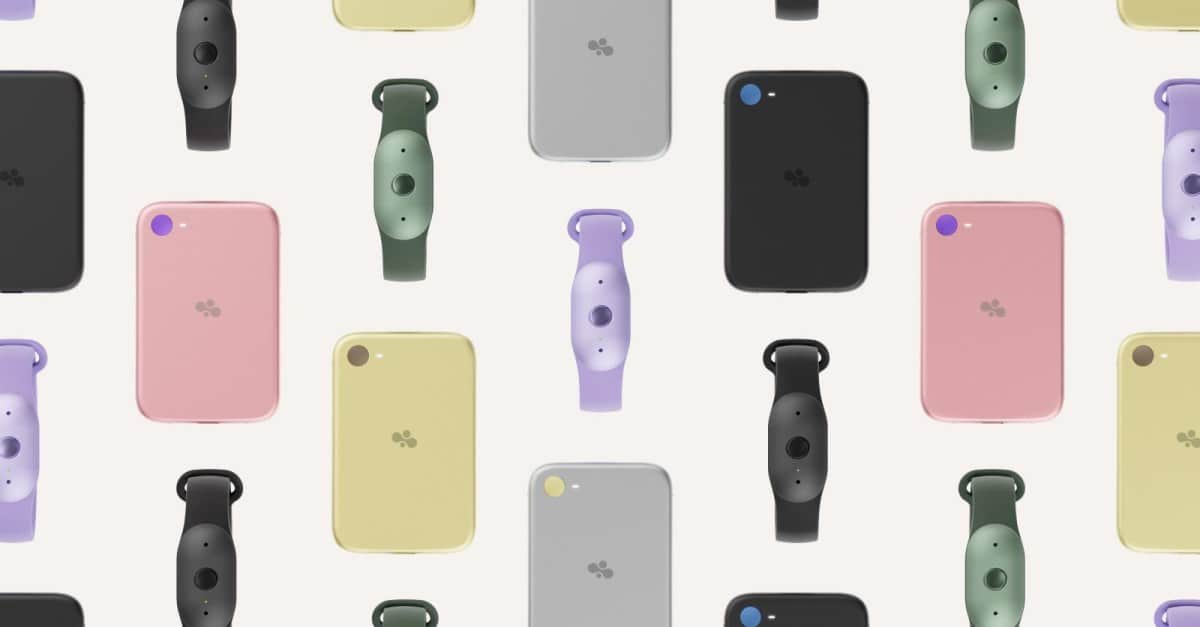
Image: The Verge
Amazon’s new Bee Frontier and Bee Eclipse capture a person’s day to produce summaries, reminders, and follow-up actions. Amazon’s distribution changes the equation. With a Bee Pro subscription, conversation-derived context can reach Alexa+ and Amazon.com, turning a device intended to remember a passing mention of dish soap into a possible shopping prompt on Amazon’s homepage.
The hardware is modestly priced. The wrist- or clip-worn Frontier costs $74.99 and is available in the US as of October 15, 2026. The credit-card-sized, magnetic Bee Eclipse starts at $99.99 and is listed only as “available soon.” Both turn enabled conversation capture into transcripts, summaries, extracted to-dos, reminders, and recurring-theme insights.
Bee is less a standalone assistant than a personal context collector connected to Amazon’s account, retail, and Alexa systems. The company’s product document says shopping recommendations can appear on Amazon’s homepage and in Bee’s mobile and desktop apps after a user connects their Amazon account. The connection is opt-in, but Bee can turn an everyday conversation into an item presented for purchase.
Two form factors, one capture model
Frontier replaces Bee’s earlier Pioneer wearable, which had cost $50. The new model can sit in a silicone wristband or a clip attached to clothing or a bag. It retains the earlier model’s claimed seven-day battery life and USB-C charging, while adding IP67 dust and water resistance, three color options, and dual microphones with advanced noise filtering. Amazon says the filtering is intended to isolate relevant speech in places such as restaurants and open offices.
Eclipse uses the same basic software model in a magnetic phone attachment. It is a thicker card-like device rather than something worn on the body. Its larger chassis supports a claimed battery life of more than 21 days, and reporting identifies three onboard microphones. Frontier is designed to be carried by the person, while Eclipse is designed to stay on the phone that often accompanies calls, meetings, and social plans.
| Device | Physical format | Claimed battery life | Microphones | Water resistance | US availability |
|---|---|---|---|---|---|
| Bee Pioneer | Wristband or clip wearable | Up to 7 days | Dual microphones with noise filtering | Not water-resistant | No longer sold |
| Bee Frontier | Wristband or clip wearable | Up to 7 days | Dual microphones with advanced noise filtering | IP67 | Available October 15, 2026 |
| Bee Eclipse | Magnetic phone attachment | More than 21 days | Three microphones | Not specified | Available soon |
Frontier’s physical changes are limited. Seven-day endurance is unchanged, and neither product’s announcement supplies microphone specifications, processor details, storage capacity, latency measurements, or accuracy benchmarks for transcription, speaker handling, summaries, or noise filtering. The hardware is primarily an input accessory for Bee’s service, not a major new compute platform.
Amazon’s controls also matter more than the “always-listening” label suggests. CNBC described Bee as always recording when enabled, while Amazon’s product documentation says users control audio processing with a microphone button and can configure the device to turn off after a selected period without detected sound, such as five or 15 minutes. The company describes sustained ambient capture during an enabled session, not an uninterruptible recorder that cannot be stopped. Both Frontier and Eclipse have a single on/off control and an LED intended to show when the device is active or summarizing.
That distinction will be visible to the person wearing Bee, but less reliably to everyone nearby. Eclipse’s magnetic, card-shaped form makes it resemble a phone accessory or battery pack. An indicator LED is better than a hidden microphone, but it does not resolve whether people around the device recognize what the light means. Amazon says Eclipse prompts users to gain permission from call participants each time recording starts; the supplied material does not describe how that prompt works for in-person conversations.
The $11.99 layer is where Bee becomes an Amazon service
Bee remains usable without a subscription, but the free tier is bounded: users receive conversation summaries, recaps, and 14 days of memory. Bee Pro costs $11.99 a month and adds unlimited recent conversation summaries, suggested to-dos, daily memories, a personal chat assistant, conversation templates, third-party integrations, the desktop app, and Amazon.com and Alexa+ connections. New Bee buyers receive 30 days of Bee Pro at no charge.
The product is most useful when it can act on captured output rather than merely archive it. Bee can connect to Gmail, Google Calendar, Microsoft Outlook, Apple HealthKit, and photos. From a conversation or meeting, it can surface action items, draft a follow-up email, or create a calendar invitation. Amazon describes templates for lectures, care plans, and brainstorming.
Those integrations define the product’s boundary. A note recorder can be judged on whether it stores, organizes, and retrieves what the owner says. Bee Pro connects resulting summaries to a retailer, voice assistant, email systems, calendars, health data, and photos. The opt-in choices matter because the device’s value rises as more personal context is connected.
The Alexa+ integration provides hands-free retrieval. A user can ask an Echo or another Alexa-enabled device for Bee summaries, to-dos, or a recommendation mentioned by a friend. Amazon says Alexa uses Voice ID to recognize the user before providing those Bee insights. The Amazon.com connection can surface products mentioned in conversation, create shopping lists, and show product recommendations in the Bee apps and on Amazon’s homepage.
Amazon’s founder of Bee, Maria Zollo, said early customers will not lose the feature set they received before the new subscription arrived.
“As a sign of gratitude, we’re giving to them the Bee they have today.”
According to Zollo, those customers receive the entire current feature set free forever. New customers face an ongoing fee for the integrations and assistant capabilities that make the new hardware more useful. Amazon has not provided a yearly Bee Pro price or said whether the free tier’s 14-day memory window can be expanded without the subscription.
Private Compute is an architecture claim, not a complete privacy answer
Amazon’s privacy argument rests on Bee Private Compute, described in its official technical overview as a confidential-processing architecture built on the AWS Nitro System and AWS Nitro Trusted Platform Module, or NitroTPM. When Bee captures a conversation, Amazon says audio is transcribed in real time and discarded rather than stored. Generated transcripts, summaries, and to-dos are encrypted with keys created and controlled only by the user’s device.
The company says the client verifies that an Amazon server is running approved, trusted software before it sends data for processing. The data is processed in an isolated environment that Amazon says neither Amazon nor Bee can access. Amazon says it has no master key for the content, and the user can delete transcripts and summaries at any time.
This is more specific than a generic promise not to sell data. It identifies a key hierarchy—device-created keys—and a server-attestation step before data leaves the device. It also defines the retained material: not raw audio, but the encrypted transcript and derived artifacts needed for search, summaries, memories, and to-dos.
Bee still collects sensitive information. Its purpose is to derive structured information from conversations and combine it, if the user chooses, with calendar, email, health, photo, Alexa+, and Amazon account connections. The supplied materials provide no independent measurements of the system’s transcription quality, its handling of overlapping speakers, or the reliability of its noise filtering. Amazon points to a third-party Trail of Bits audit and a technical white paper, but neither document is included here, so their findings cannot be assessed from the announcement.
The raw-audio policy has an operational implication: the service cannot offer a replayable recording archive because Amazon says audio is deleted after real-time processing. Bee’s “memory” is therefore a derived-text memory. That may reduce the sensitivity of stored material relative to retaining voice files, but a mistaken transcription or summary may be difficult to check against an original recording.
Cheaper hardware does not make the service cheap
At $74.99, Frontier undercuts several named card-style or personal note-taking devices: Plaud Note is listed at $159, Plaud Note Pro at $189, and Pocket at $129. Eclipse, at $99.99, is also below those prices. Bee’s low initial hardware cost is part of the pitch, but its economics are more accurately measured as device plus recurring software access.
| Option | Upfront price | Ongoing price stated in the supplied reporting | Primary role |
|---|---|---|---|
| Bee Frontier | $74.99 | Bee Pro: $11.99 per month | Wearable conversation capture |
| Bee Eclipse | Starting at $99.99 | Bee Pro: $11.99 per month | Phone-mounted conversation capture |
| Plaud Note | $159 | Not stated | Card-shaped note-taking device |
| Plaud Note Pro | $189 | Not stated | Card-shaped note-taking device |
| Pocket AI device | $129 | Not stated | Pocket AI device |
The comparison is incomplete because the supplied reporting does not establish subscription terms or feature parity for Plaud or Pocket. It shows Amazon’s tactic: Amazon is not trying to win this category on premium hardware specifications. It is using lower-cost hardware to place Bee in front of account-linked services, then reserving the most expansive integrations for a monthly plan.
Meta’s AI smart glasses and its Muse Charm pendant are different form factors, while products from Plaud, Pocket, Comu, Innaio, Ruune, and Raycon are closer in the phone-attached or note-taking category. Bee can extract notes from speech, as several competitors claim, but Amazon can route those notes into its own shopping surface and Alexa+ interface.
Amazon is selling the follow-up, not the transcript
The four reports agree on the core specifications, prices, and subscription structure. They differ in what they surface around the product: Frontier’s replacement of Pioneer and added IP67 rating; Eclipse’s three microphones and more than 21-day battery claim; Bee Pro’s 14-day free memory boundary; and the early-customer promise of continued free access. Together, they describe a device line whose changes are less about microphones than commercial and account-level integration.
Bee is compelling only for a narrow kind of customer: someone comfortable letting a device derive persistent text memories from daily conversation and willing to connect those memories to the same Amazon account used for shopping and Alexa. For everyone else, the inexpensive hardware is not the deciding number. The recurring $11.99 fee, the short free-memory window, and whether people around the device understand its status light are the product’s actual constraints.
Eclipse has no firm US release date beyond “available soon,” and Amazon has supplied no independent accuracy, latency, or battery test data for either device. The clearest verified change is that Bee can convert what it hears into a route back to Amazon.com.
Frequently asked questions
How much do Amazon’s Bee Frontier and Bee Eclipse cost?+
Bee Frontier is available for $74.99. Bee Eclipse starts at $99.99 and Amazon says it will be available soon.
What does Bee Pro cost and what does it add?+
Bee Pro costs $11.99 per month. It adds unlimited recent summaries, third-party integrations, Amazon.com and Alexa+ connections, the desktop app, suggested to-dos, daily memories, a chat assistant, and templates.
Does Bee store audio recordings?+
Amazon says Bee processes audio in real time and deletes it after processing. It says transcripts, summaries, and to-dos are encrypted using keys created and controlled by the user’s device.
Can Bee use conversations for Amazon shopping?+
If a user opts in to connect Bee to Amazon.com, Bee can surface product recommendations from items mentioned in conversation on Amazon’s homepage and in Bee apps.

Editor-in-Chief
Sergey Kuznetsov is Head of Product at iXBT.com, one of the largest Russian-language technology media outlets, and the founder of itzine.ru. He has spent over a decade building and running tech newsrooms. At for(geeks) he sets editorial standards and reviews what ships.