• Updated • 5 min read
Tesla’s Austin robotaxis drop onboard safety monitors
A crowdsourced tracker logged 170 unsupervised Austin rides as Tesla prepares to launch its wheel-less Cybercab.
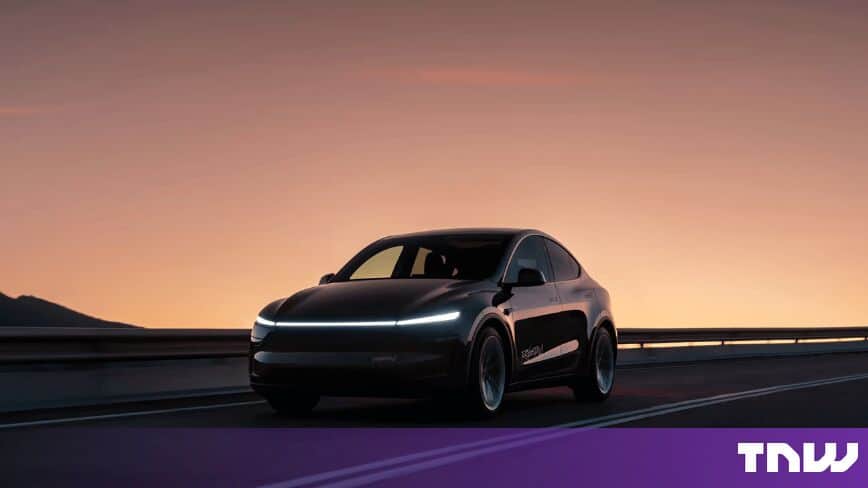
Image: Tnw
Tesla’s Austin robotaxi service appears to have reached a new stage: all 170 rides monitored over two weeks ran without a human safety monitor onboard, involving 54 different cars. The Verge reports that the shift comes as Tesla prepares to deploy its purpose-built Cybercab in Austin as soon as August 2026.
The figures come from Robotaxi Tracker, a crowdsourced project that uses app users' automatic ride logs alongside other public and crowdsourced data. Its creator, Ethan McKanna, told The Verge:
“Austin has seemingly stopped supervised rides for a couple weeks now.”
McKanna said vehicles previously marked as supervised have since been confirmed to offer unsupervised rides. The tracker also identified roughly 30 driverless Teslas in Dallas and Houston over the past week.
Why the fleet count is difficult to verify
The apparent expansion is partly a data correction. The tracker had shown only 28 active unsupervised vehicles across six Texas and Florida markets as recently as the previous week, but McKanna said some of its metrics were lagging. After revising the data sources, he found more unsupervised vehicles than the site had previously recorded and began updating the figures.
That means the jump reflects both a real operational change and a better measurement system. Tesla does not publish detailed robotaxi fleet data and did not respond to requests for comment, leaving the tracker as one of the few public ways to estimate how many vehicles are operating without onboard monitors.
“Unsupervised” also does not necessarily mean fully independent. A safety monitor can take control from inside the vehicle, while a remote operator can advise or authorize manoeuvres from elsewhere. Tesla has not disclosed how often remote staff intervene or how many cars each operator supervises.
A Tesla robotaxi hit plastic bollards
The expanded service is facing an awkward test. On August 18, 2026, a passenger filmed an Austin Tesla creeping toward a curb extension marked with plastic bollards, reversing, moving forward again, and then driving through the posts. The recording includes a thud and the passenger saying, “it hit em, it hit em.”
TNW reports that Reddit users located the corner using a Texas Orthopedics building visible in the video. Google Street View showed that the bollards had been in place since at least February 2024, suggesting the incident may have involved the vehicle’s mapping or scene-understanding process rather than a newly placed obstacle. It is not known whether a remote operator approved the manoeuvre.
Tesla has chosen not to use the proprietary high-definition maps associated with Waymo and has dropped lidar on cost grounds, according to the reporting. The vehicle instead has to detect and interpret fixed obstacles using its onboard sensors and computing systems in real time.
At Tesla’s second-quarter earnings call, the company’s vice president of AI, Ashok Elluswamy, said Tesla had completed more than 380,000 robotaxi miles with “zero notable incidents.” Tesla did not define what qualifies as notable.
That mileage remains far below Waymo’s reported total of roughly 220 million unsupervised ride-hailing miles, as cited by TNW. The Verge separately reports that Waymo operates more than 300 driverless vehicles in Austin and about 4,000 vehicles across 10 other cities. Waymo has previously argued that cameras alone fall short for fully autonomous robotaxis, backing lidar and radar instead.
Cybercab raises the stakes
Tesla has also been limiting the addition of Model Ys to the service, according to a JPMorgan note cited by The Verge, because the company expects to scale Cybercab in the near term. Tesla employees have begun receiving rides in the new vehicles, which could later join the Austin fleet.
Unlike the Model Ys currently providing rides, the Cybercab is designed without a steering wheel or pedals. Removing the onboard safety monitor from Model Y operations is therefore an important step toward deploying a vehicle in which no passenger can take over manually.
Tesla CEO Elon Musk said the robotaxi programme would scale “very, very rapidly” but gave no new target for the number of vehicles or cities—after repeatedly missing more specific forecasts. The Austin service now has no onboard safety monitor in the rides tracked by Robotaxi Tracker, while Tesla still does not disclose the size of the fleet or the role remote operators play.
Update, 3 October 2026 — Cybercab launches with 169 Texas authorizations
CNBC reports that Tesla commercially launched Cybercab rides in Austin on September 3. Texas Department of Motor Vehicles records showed 45 of the driverless two-seaters authorized for commercial service at the unveiling, rising to 169 as of Friday. Austin remains the only city where Tesla is operating Cybercabs in its ride-hail service.
The National Highway Traffic Safety Administration opened an audit query after the launch to examine whether the vehicles comply with federal safety standards. CNBC reports that Tesla received an extension to respond after the agency had initially set a September 30 deadline for its safety questions.
A section byline, not a person: stories filed here by for(geeks) are held to the same editorial policy as every story we run.