• Updated • 5 min read
Lenovo leaks show Google’s Chromebook successor
Leaked Lenovo images show Googlebook laptops and a 2-in-1 tablet, including new lighting and dedicated Gemini-related keyboard keys.
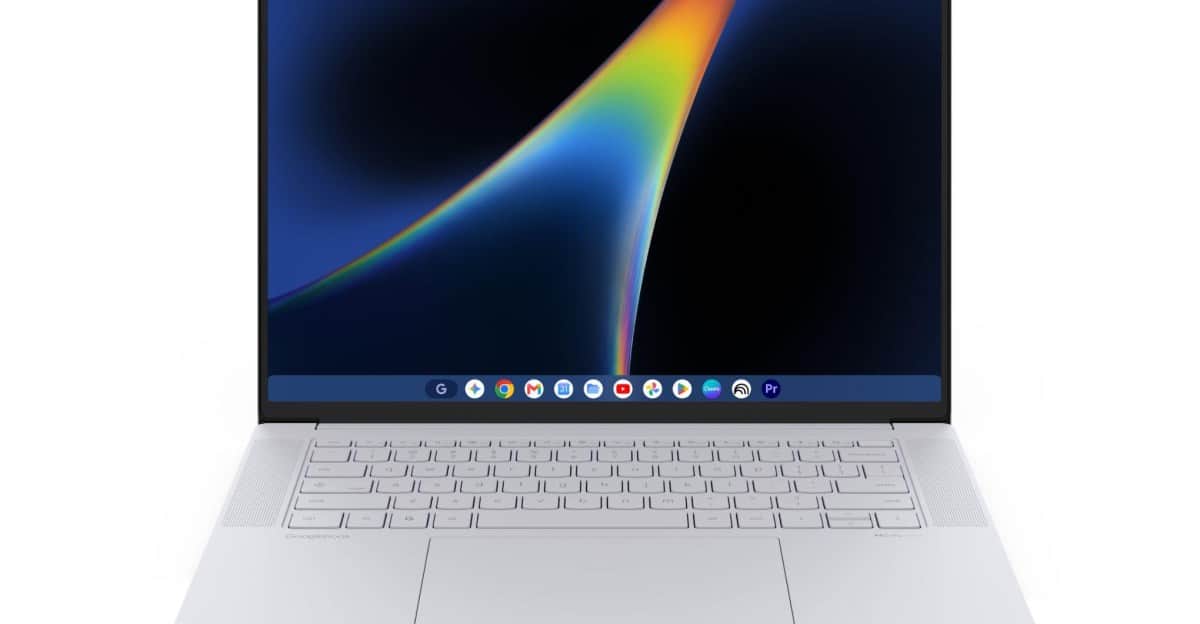
Image: The Verge
Leaked Lenovo press images offer the clearest look yet at Googlebook, Google’s Android-based successor to Chromebook. Lenovo is expected to release some of the first models later this year, with the initial devices from Acer, Asus, Dell, HP, and Lenovo scheduled for fall 2026.
The images, shared by Digital Citizen and Android Headlines, show a conventional laptop and a 2-in-1 tablet. Both use Googlebook branding on the keyboard and closely resemble Lenovo’s existing Chromebook hardware, although the designs include several new details.
Lenovo’s leaked Googlebook hardware
The laptop appears to come in two sizes, with both versions resembling the same basic model. A light strip runs along the rear of the laptop, echoing the glowing bar shown in official Googlebook renders released by Google earlier this year.
The 2-in-1 tablet has a similar light bar built into its rear camera housing. That design recalls the glowing orb reportedly planned for Google’s upcoming Pixel 11 lineup. The leaked images also show an AI mouse that Lenovo is reportedly developing, although the source provides no specifications or release information for the accessory.

Recommended reading
IFA 2026: Xiaomi 18 Fold, Anker MindBase, LG OLED evo AI W6 and 13 more
Sergey Kuznetsov • • 8 min read
Two Gemini-related keyboard keys
The keyboards add a new bottom-row key marked with Google’s “G” logo. Digital Citizen reports that it is a dedicated hardware button for opening Gemini. The same keyboards also appear to include a Quick Insert key in the position traditionally occupied by Caps Lock.
That placement creates some ambiguity around the new G key’s role: Chromebooks introduced the Quick Insert button in 2024 as a way to call up Gemini. The source does not explain whether the leaked Googlebook keyboards assign different functions to the two keys.
Google announced the Android-based Googlebook platform in May, but details remain limited. Googlebooks are expected to replace ChromeOS with a new operating system, while Gemini is reportedly set to be integrated throughout the platform. Google and Lenovo have not provided pricing or a more specific release date for these devices.
Update, 2 September 2026 — Acer confirms its first Googlebook
At IFA 2026 in Berlin, Chrome Unboxed reports that Acer publicly confirmed its first Googlebook is “coming soon.” The company released a brief teaser image but did not disclose the machine’s internal specifications.
The image does establish one hardware detail: Acer’s first Googlebook is a convertible rather than a conventional clamshell, with hinges that support tent and tablet modes. Acer placed a Google Pixel phone beside the laptop in the teaser, while the report says the company plans to show the device at Google’s private media preview in New York on September 15.
Update, 18 September 2026 — Googlebooks open for preorder September 21
Android Central reports that Google’s first Googlebooks will be available for preorder on September 21. The report does not say whether ASUS’s leaked model will be among the systems available that day, and says pricing, final specifications and shipping dates remain undisclosed.
The ASUS renders show a dark-gray clamshell with a multicolor lid light bar, a large trackpad, thin display bezels and a dedicated G key. Side views appear to show two USB-C ports, two USB-A ports and a headphone jack, along with a fingerprint sensor. A visible fan and heat pipe indicate active cooling, though the report says the processor is unknown.
Update, 21 September 2026 — Preorders open at $899, shipping starts October 4
TechCrunch reports that Googlebook preorders are now open at $899 through the Google Store, Best Buy and other retailers. The devices are due to reach U.S. stores on October 4, followed by Canada, the U.K., Ireland, France, Germany and Australia on October 5.
Google says the $899 model includes 12 months of Google AI Pro, with 5TB of cloud storage, Gemini Advanced tools and promotional subscriptions including three months of YouTube Premium and Adobe Photoshop. The company also says Googlebooks will receive software updates for up to 10 years.
Update, 21 September 2026 — Five launch models range from $899 to $1,299
PCWorld reports that the launch lineup consists of five machines from Acer, Asus, Dell, HP and Lenovo. The $899 Acer Googlebook 14 is the lowest-priced model; Asus and HP each list a $1,299 14-inch model, Dell’s XPS Googlebook is listed at $1,199, and Lenovo’s 15.3-inch Googlebook costs $1,099. Best Buy is showing the Dell at $999, according to the report.
All five meet Google’s stated baseline of 16GB of RAM, 512GB of storage and a touchscreen. Acer, Asus and Lenovo use Intel Core Ultra 5 Series 3 325 processors, while Dell and HP use Qualcomm Snapdragon X Elite chips. The Acer is the only convertible in the initial group; its 14-inch OLED touchscreen folds into tablet and tent modes. MediaTek-based Googlebooks are planned for later.
Update, 21 September 2026 — Google quotes 14 hours of battery life
The Register reports that Google quotes the first Googlebooks at up to 14 hours of use. The report also says the systems support application and web-page handoff between devices, native Android apps, and access to files on a paired Android phone.
Google’s Gemini features include Magic Pointer, which invokes the assistant by moving the cursor, Rambler for voice transcription and formatting, and Create My Widget, which generates desktop widgets from natural-language descriptions. The Register says the preorder systems include 12 months of Google AI Pro.
A section byline, not a person: stories filed here by for(geeks) are held to the same editorial policy as every story we run.