• 10 min read
Public shareholders will fund Anthropic without controlling it
Anthropic’s S-1 pairs $16.3 billion in first-half revenue with an $80.7 billion net loss and founder control of 50.1% of votes.
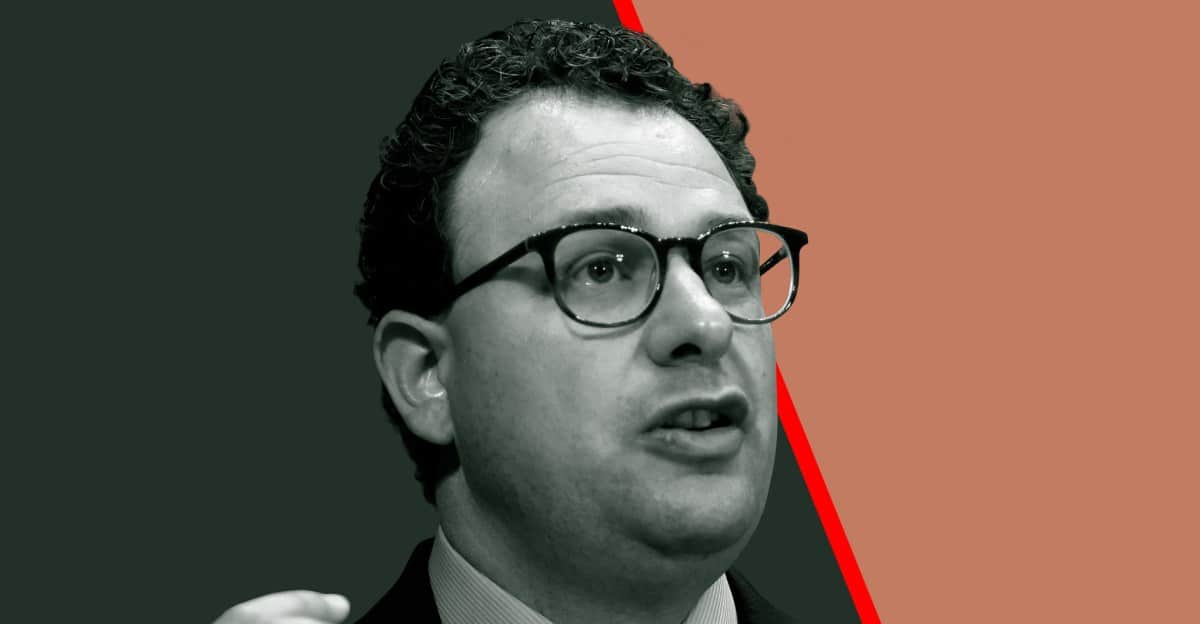
Image: The Verge
Anthropic’s planned Nasdaq listing will ask public investors to finance an infrastructure-heavy AI company while granting its seven founders durable control over its direction. Its public S-1, filed on October 26, 2026, sets out a business that generated $16.3 billion in revenue during the first half of 2026, reported an $80.7 billion net loss, and has committed itself to extraordinary long-term compute purchases.
The company plans to trade under ANT. It has not disclosed an IPO date, share count, price range, amount sought, or target valuation. Reports that place a potential listing in November or value the company near $2 trillion are not terms in the registration statement and should not be treated as settled offering details.
Anthropic says Claude’s enterprise adoption and consumption-based revenue can support massive advance commitments for chips and data-center capacity. Its governance terms give the founders 50.1% of voting power through a Founder LLC. Public stockholders can own the economic exposure, but the founders retain control.
“We encourage you, as a prospective owner of our stock, not to think of your purchase in purely transactional terms. We hope you will see it instead as an opportunity to be part of something greater.”
The company frames that structure as protection for its public-benefit and safety mission. For investors, it means conventional shareholder pressure will have limited leverage over model-release decisions, compute spending, or the company’s response to safety disputes.
Revenue is rising faster than the operating bill
The S-1 registration statement filed with the SEC distinguishes between operating performance and a far larger net-loss figure driven chiefly by noncash accounting adjustments tied to convertible debt. The headline net loss of $80.7 billion does not mean Anthropic burned $80.7 billion of cash in six months. It also does not make its cash requirements small.
Recommended reading
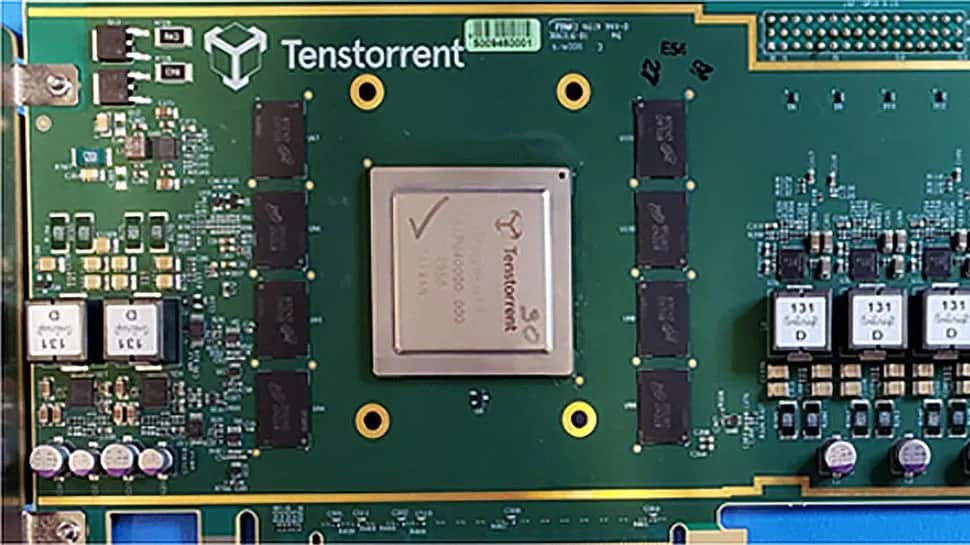
Tenstorrent’s $6.2 billion bet is on open-weight inference
Sergey Kuznetsov • • 3 min read
TechCrunch’s figures from the filing put first-half revenue at $1.2 billion in 2025 and $16.3 billion in 2026. It also reports operating loss falling from $2.1 billion to $693 million across those periods. The company nevertheless says it may not achieve or sustain profitability.
| First-half measure | 2025 | 2026 |
|---|---|---|
| Revenue | $1.2 billion | $16.3 billion |
| Operating loss | $2.1 billion | $693 million |
The coverage contains a notable error: Wired described the net loss as $80.7 million, while The Verge, CNBC, BBC, and TechCrunch reported $80.7 billion. The latter is the figure consistently attributed to the public S-1 and is the figure Anthropic investors must evaluate.
Anthropic had raised an aggregate $141.1 billion by June 30, 2026, with $112.4 billion in cash and cash equivalents plus $19.3 billion in short-term investments. CNBC reports $6.2 billion in debt at the end of June, principally convertible notes issued to Amazon beginning in 2023. Those balances give the company funding capacity, but they do not eliminate the mismatch between a rapidly scaling service business and the fixed infrastructure commitments needed to operate frontier models.
Its revenue mix leans heavily toward metered use. Consumption-based revenue accounted for $13.1 billion, or 80%, of first-half revenue, while subscriptions supplied $3.2 billion, or 20%. Anthropic expects consumption revenue to remain the substantial majority. This makes revenue more directly connected to customer workload growth than a seat-based software business, but it also makes the company dependent on maintaining model demand while paying for the capacity behind it.
Compute contracts are the real long-term exposure
The filing records commitments that make Anthropic’s financial picture much larger than six months of operating results. Once planned capacity is delivered, it expects to pay SpaceX about $3.1 billion per month for Nvidia GPU access, totaling as much as $120.5 billion through 2029. Separate commitments include $44.9 billion with Microsoft through 2033, at least $114.5 billion with Google through 2033, and $110 billion with Amazon during the next decade.
The commitments differ. They bind Anthropic’s future to the availability, power supply, construction schedules, and commercial terms of several infrastructure providers. The company explicitly identifies construction moratoriums on U.S. data centers as a risk because a disruption at a major facility may not be readily absorbed by remaining or future capacity. It is also seeking data centers outside the United States to reduce concentration risk.
Supply-chain concentration appears elsewhere in the filing. Anthropic identifies Taiwan’s advanced-chip manufacturing, particularly TSMC, as a risk because natural disasters, geopolitical tension involving China, power failures, and trade restrictions could constrain chip supply. Anthropic’s product economics depend on access to the accelerators that its providers can deploy.
The company also lists access to power and water, political opposition to data centers, changing AI regulation, and potential AI-specific taxes among its risks. An IPO would fund a model provider that must keep reserving scarce physical infrastructure to preserve service capacity and frontier-model development.
Enterprise concentration and internal automation
Anthropic reports more than 11,900 enterprise customers that generated at least $100,000 in trailing-12-month revenue as of September 30, 2026. More than 1,900 generated at least $1 million, and roughly 250 produced at least $10 million. The figures suggest that the company has customers with meaningful production workloads rather than an enterprise business built only around small pilots.
It also says a growing number of those customers have non-cancelable annual or multiyear contracts, although the company does not disclose a retention rate, backlog amount, or the share of revenue tied to any individual customer. Those omissions matter more than the customer-count milestones: a consumption business can produce exceptional near-term growth while remaining exposed to a small number of very large buyers changing workloads, model vendors, or procurement policy.
Anthropic had 5,300 employees as of September 30, up from 940 at the end of 2024. It reported $6.6 million in trailing-12-month revenue per employee and says more than 90% of contributions to its codebase in September were written by Claude. The company calls its employees “Ants” and presents internal model use as a way to keep a relatively lean team.
That claim is incomplete as a productivity measurement. “Contributions” is not a measure of accepted code, defects, deployment quality, or engineering output, and Anthropic provides no comparable baseline. It does show the extent to which the company is willing to rely on its own models inside the development process while selling those models to enterprises.
We previously covered how Claude Code moved product work into persistent, file-based workflows, rather than disposable chat sessions. The S-1 identifies coding use as a major driver of 2026 expansion, but it does not break out Claude Code revenue, customer retention, or unit economics. That leaves investors unable to isolate how much of the reported growth comes from coding workloads versus the rest of Anthropic’s API and subscription products.
Safety claims become securities-law disclosures
Anthropic’s filing is direct about the risks attached to the technology it sells. It says advanced systems could pose catastrophic or existential risks if they are misused, replicated, weaponized, or allowed to operate with high autonomy. It groups its concerns around misuse, loss of control, authoritarian abuse, and economic disruption.
“Our safety-focused approach is designed in part to mitigate such risks, but there can be no assurance that our efforts will be successful or that the broader AI industry will adopt similar safeguards.”
The prospectus says the company makes judgment calls about when models are safe enough to release and acknowledges it cannot guarantee that its safeguards are adequate or that it will correctly identify capabilities requiring restrictions. It lists abuse for cyberattacks and novel biological weapons, authoritarian surveillance, loss of control over its models, copyright litigation, and the possibility of model sentience among the broad risk factors.
Anthropic also warns that no single insurer, and potentially not the insurance industry in aggregate, may be able to underwrite catastrophic AI incidents. The filing recognizes harms that may not be fully insurable while offering public investors little ability to alter the people making deployment decisions.
The risk list includes government relations. The company cites the Trump Administration’s designation of Anthropic as a supply-chain risk and warns that disputes could impair sales to government agencies and to customers serving the U.S. government. The filing names OpenAI and Google as direct competitors for frontier models sold to developers and enterprises, while also identifying open-weight and open-source providers as a broader competitive set.
Our coverage of Claude’s invisible text watermarking and its limits showed the company advancing specific mechanisms for identifying generated text while acknowledging that edits and code limit what those mechanisms can establish. The S-1's safety language is wider: it is a statement of governance intent and risk exposure, not evidence that every technical control will work under adversarial or autonomous use.
Founder control is the IPO’s defining trade-off
Dario Amodei, Daniela Amodei, Tom Brown, Jack Clark, Jared Kaplan, Sam McCandlish, and Christopher Olah make up the Founder LLC. Together, the group will hold 50.1% of the voting power of outstanding shares. The Long-Term Benefit Trust, created in 2023, has authority to appoint most of the board.
| Governance holder | Authority described in the filing |
|---|---|
| Founder LLC | 50.1% of outstanding voting power |
| Long-Term Benefit Trust | Authority to appoint most of the board |
The arrangement is not a standard case of founders holding enough supervoting stock to protect a company during its early public years. It separates voting authority from economic ownership in a company explicitly warning that its systems could cause harms beyond what normal insurance can cover. Anthropic argues that the arrangement protects its safety mission; outside shareholders should understand that it also limits their practical control if they disagree with management’s definition of safety, acceptable spending, or commercial urgency.
Executive compensation shows how much of the company remains founder-directed. Dario Amodei received nearly $18 million in 2025, mostly in stock and option awards. Daniela Amodei, the president and a director, received $16.4 million. CNBC also reports that Daniela Amodei’s husband, Holden Karnofsky, has worked at Anthropic since January 2025 and received just over $430,000 in total compensation excluding options and restricted stock units.
What investors can and cannot price yet
The filing supplies a clearer operating picture than the IPO rumors that preceded it, but it still omits the numbers needed to value the offering: no share count, no price range, no offering size, and no announced listing date. It also does not provide independent performance evidence for the model capabilities that must sustain this scale of consumption revenue and compute investment.
The critical question is whether Anthropic’s rapid top-line growth can cover compute commitments measured in hundreds of billions of dollars while the people buying the stock have limited ability to change the company’s course. The missing price range determines whether public investors are being asked to finance that bet on tolerable terms.
Frequently asked questions
When will Anthropic stock begin trading?+
Anthropic has not disclosed an IPO date, share price range, share count, or offering size. It plans to list on Nasdaq under the ticker ANT.
How much revenue did Anthropic report?+
Anthropic reported $16.3 billion in revenue for the first half of 2026. Consumption-based revenue was $13.1 billion, or 80% of total revenue.
Why was Anthropic’s net loss so large?+
Anthropic reported an $80.7 billion first-half net loss. The company said the figure was largely driven by noncash accounting adjustments related to convertible debt.
Will public shareholders control Anthropic?+
No. Anthropic’s seven co-founders will control 50.1% of voting power through the Founder LLC. Its Long-Term Benefit Trust can appoint most of the board.

Editor-in-Chief
Sergey Kuznetsov is Head of Product at iXBT.com, one of the largest Russian-language technology media outlets, and the founder of itzine.ru. He has spent over a decade building and running tech newsrooms. At for(geeks) he sets editorial standards and reviews what ships.