• 6 min read
Robotaxi system exposes why self-driving cars stop
MIT and Motional’s CW-Net explains robotaxi decisions in real time, helping safety drivers predict failures such as emergency braking near cyclists.
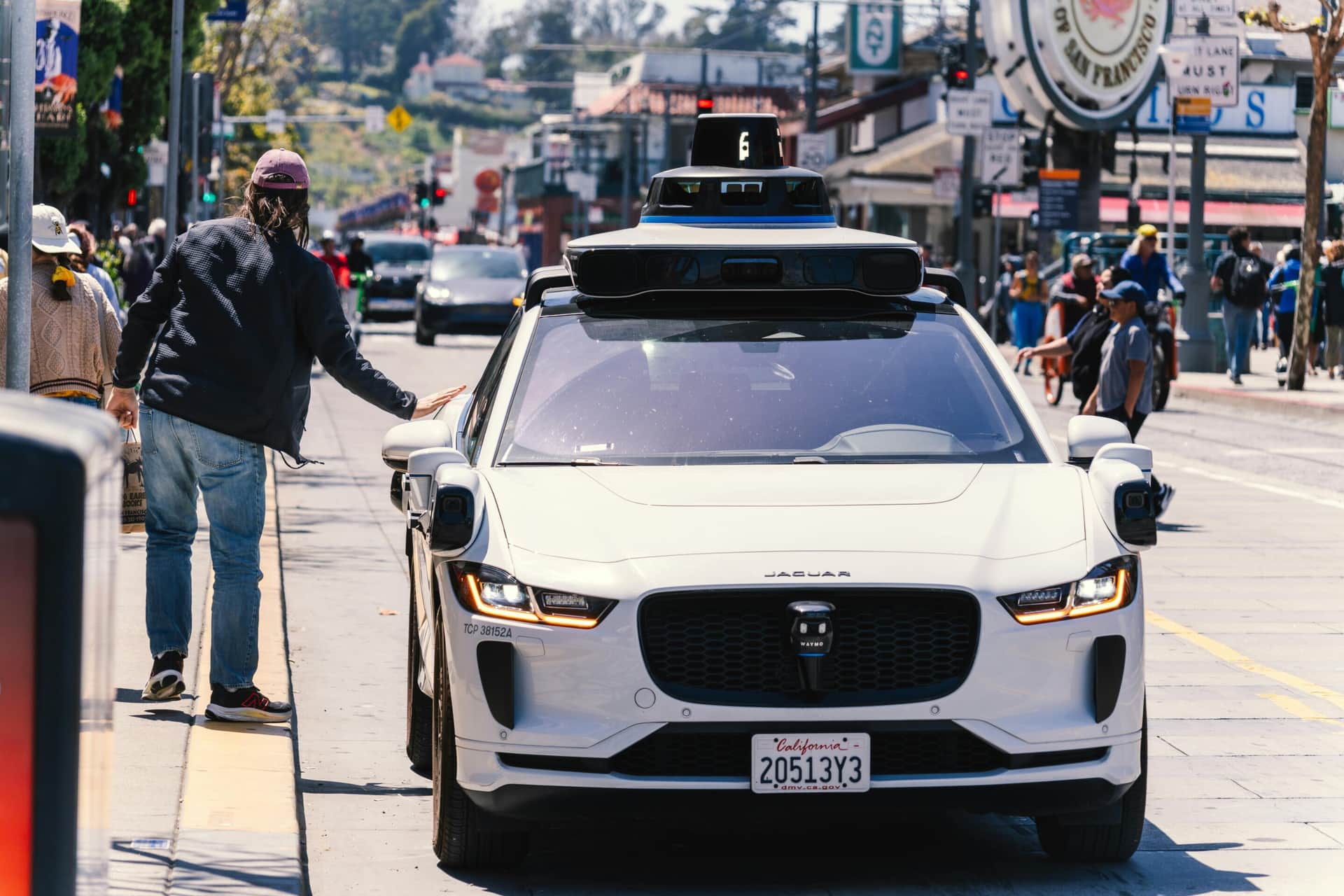
Image: TechXplore
A self-driving car that stops for a cyclist may appear to have recognized the cyclist and planned around it. In testing by MIT and Motional, that assumption was sometimes wrong: the vehicle had failed to detect the cyclist and stopped only because an emergency-braking routine triggered when it got too close.
A safety driver or passenger needs to know whether the vehicle is behaving cautiously or has entered a dangerous failure mode. The researchers' Concept-Wrapper Network, or CW-Net, is designed to expose that difference by translating a machine-learning planner’s internal state into human-readable concepts while leaving the planner’s driving performance unchanged.
The work, published in the Nature research paper on explainable deep learning for self-driving cars, targets a problem that conventional telemetry does not solve. Autonomous vehicles can report sensor detections, planned trajectories and control actions, but those outputs do not necessarily reveal why a black-box planner selected a particular trajectory.
How CW-Net fits into the planner
The planner is the vehicle’s high-level decision layer. It processes information from cameras and lidar, produces a summary of the surrounding scene, decides what the vehicle should do next and outputs a trajectory. Deep-learning models can perform those steps effectively, but their internal representations are difficult for an engineer or safety driver to interpret after something goes wrong.
Recommended reading
IFA 2026: CoolFly Dream ST, Dream Pro and Urban share NA80 flight controls
Sergey Kuznetsov • • 3 min read
CW-Net is inserted into the middle of that existing planner architecture. It is trained as a concept classifier: instead of exposing raw internal activations, it predicts higher-level descriptions such as “approaching stopped vehicle” and “close to cyclist.” The final portion of the planning architecture is then forced to use those concepts when selecting the next action.
The researchers' claim depends on that connection. CW-Net is not merely generating a plausible caption after the planner has made a decision. By routing the final planning step through the classified concepts, the method is intended to make those concepts causally faithful to the vehicle’s behavior. The same concepts are emitted alongside the planned trajectory in real time.
The system was trained on 130 million labeled driving-scene examples. Each scene contained multiple labeled concepts, giving the classifier examples across a wide range of road situations. The researchers also trained it to mimic the decisions of the underlying machine-learning planner, with the goal of adding explanations without degrading the vehicle’s driving behavior.
“Especially in high-stakes settings like self-driving cars, it’s important that the explanations are not potentially misleading. Because CW-Net is causally faithful in how it makes decisions, that provides certain guarantees around the explanations.”
The design avoids a common failure mode in explainable machine learning: an explanation can sound reasonable while describing a factor that did not actually influence the model. That kind of post hoc explanation would be particularly risky in a vehicle, where a safety driver could act on a false understanding of what the system sees.
Track testing showed the value of the explanation
The team evaluated CW-Net on a real Motional robotaxi driven on a private track with a safety driver. In the cyclist scenario, the car repeatedly stopped as it approached the cyclist. Without an explanation, the safety driver interpreted the behavior as evidence that the system had detected the cyclist.
CW-Net instead indicated that the planner had not been properly configured to detect the cyclist. The stop came from emergency braking after the vehicle became too close, and the trajectory selected before that intervention would have caused a collision. With that information, a safety driver could slow down earlier or switch to manual driving before the emergency-braking condition was reached.
Rather than a generic warning that “the car made a mistake,” the explanation identifies the model’s apparent reason for stopping and separates a deliberate response to a recognized object from a late safety fallback. Engineers can also use the real-time concept data to investigate the planner and correct the underlying failure.
The researchers tested the human benefit in two settings:
| Evaluation setting | Participants or vehicle | Reported result |
|---|---|---|
| Private-track test | Motional robotaxi with a safety driver | CW-Net helped the safety driver predict the vehicle’s behavior in surprising situations |
| Online simulation | Nonexpert participants using real driving situations recorded in Las Vegas | Explanations significantly improved participants' ability to predict the vehicle’s behavior |
The second evaluation tested whether the result extended beyond safety drivers. Using real road situations captured in Las Vegas, the larger simulation study produced results similar to the private-track test among nonexperts.
The supplied research account does not provide numerical accuracy scores, participant counts, latency measurements or a comparison against a different explanation method. It also does not establish that CW-Net reduces collisions, changes the vehicle’s autonomy level or is deployed in a commercial robotaxi service. The demonstrated benefit is narrower: people were better able to predict what the tested system would do when they received the model’s concept-based explanations.
A safety interface, not a replacement for autonomy safeguards
Julie Shah, an MIT professor of aeronautics and astronautics and director of the Interactive Robotics Group at MIT’s Computer Science and Artificial Intelligence Laboratory, said the value of the method is tied to the human mental model of the vehicle.
“This work shows how explanations support a human’s mental model and understanding of a system’s behavior, and how they could be used in engineering and development to improve the technology. Unless we build these technologies in a way that allows us to rely on and predict their behavior, they have a shaky and unsafe foundation for use.”
During deployment, a safety driver could use the live concepts to anticipate an unexpected stop or take over sooner. During development, the same output could help engineers find cases where perception and planning disagree—for example, where the planner chooses a trajectory as if a cyclist were absent and then relies on emergency braking when the gap closes.
CW-Net does not make the planner itself transparent in every detail. It provides a constrained vocabulary of higher-level concepts, and the researchers say future work will expand the concepts it covers and explore different training and design techniques. A concept such as “close to cyclist” can be useful, but the account does not show the full confidence, timing or sensor-level evidence behind each concept.
That limitation matters for autonomous-vehicle designs that must make their behavior legible to people inside the car. We’ve tracked the hardware side of that debate in Waymo’s argument that cameras alone fall short for fully autonomous robotaxis: sensor coverage and planning reliability are separate issues, but both affect whether a human can understand and safely supervise the system.
The work also adds an interpretability layer to a sector already testing driverless services and unusual vehicle controls. Yandex reported a 700-kilometer driverless trip, while Zoox received approval for robotaxis without steering wheels. Neither development establishes that passengers can diagnose a vehicle’s decisions, which is the specific gap CW-Net addresses.
The demonstrated use is narrower than a promise of safer autonomy by itself: CW-Net can make failures visible early enough for a safety driver to respond and for an engineer to reproduce the conditions.
Frequently asked questions
What is CW-Net?+
CW-Net is a concept-classifier module inserted into an autonomous vehicle’s machine-learning planner. It converts internal planning information into human-readable concepts and outputs them with the vehicle’s trajectory.
Does CW-Net change how the robotaxi drives?+
The researchers designed CW-Net to mimic the underlying planner’s decisions so it would not negatively affect vehicle performance. The supplied report does not establish a commercial deployment or a change in autonomy capability.
Was CW-Net tested on public roads?+
The physical test used a Motional robotaxi on a private track with a safety driver. A larger online simulation used real driving situations captured on roads in Las Vegas.
Does the study prove CW-Net reduces crashes?+
No. It showed that safety drivers and nonexpert simulation participants were better able to predict vehicle behavior with the explanations. The supplied report does not provide collision-reduction results.
A section byline, not a person: stories filed here by for(geeks) are held to the same editorial policy as every story we run.