• 3 min read
Tenstorrent’s $6.2 billion bet is on open-weight inference
Tenstorrent raised $1.5 billion at a $6.2 billion valuation to scale hardware for open-weight model serving and video generation, but disclosed no chip-level performance data.
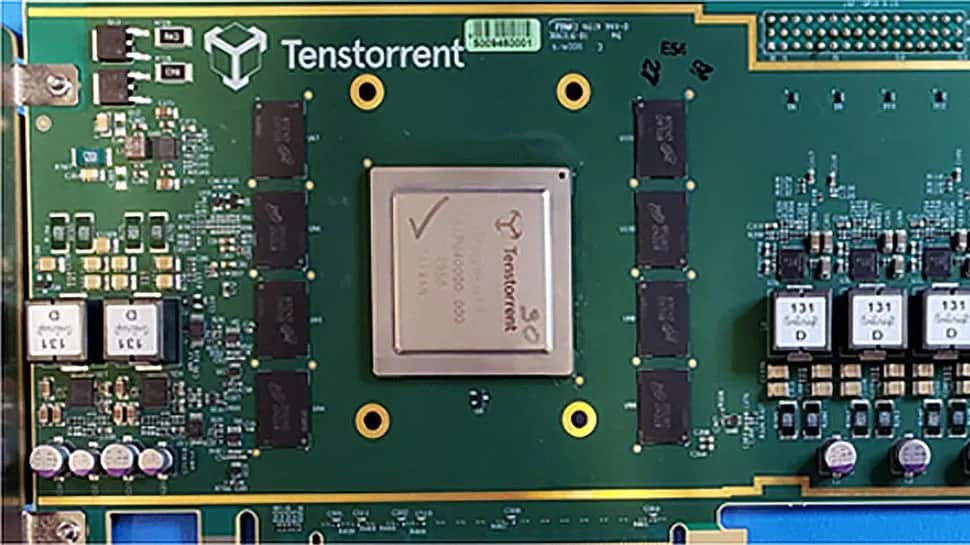
Image: TechCrunch
Tenstorrent has raised $1.5 billion at a $6.2 billion valuation, more than doubling the $2.6 billion valuation it received in late 2024. The October 19, 2026 financing gives CEO Jim Keller’s company capital to scale chips intended for serving open-weight AI models and video-generation workloads.
The company is targeting inference, the production stage where trained models generate text, images, video, or other output. Tenstorrent says the new money will fund hardware for models whose weights customers can access and deploy themselves, rather than only the closed systems run by major cloud providers.
Open-weight deployment shifts more of the operating burden to the buyer. A company running its own model must select hardware, provision servers, and absorb the performance and support trade-offs that a hosted API would otherwise hide. Tenstorrent’s case rests on making that infrastructure practical enough for open-weight models and video generation, but the financing announcement supplies no throughput, latency, power, cost-per-token, or model-specific benchmark figures.
A valuation that has moved faster than the public evidence
| Period or event | Reported valuation |
|---|---|
| Late 2024 funding | $2.6 billion |
| May 2026 acquisition interest from Intel and Qualcomm | As much as $5 billion |
| October 19, 2026 financing | $6.2 billion |
Trace Capital and Innovation X led the round. Other named backers include Cadence Ventures, Eclipse, Fidelity, SanDisk, and T. Rowe Price. Trace Capital is a new firm created by Quiet Capital co-founder Ben Mahdavi.
The $6.2 billion figure follows reported takeover interest from Intel and Qualcomm five months earlier, at valuations of up to $5 billion. Tenstorrent instead chose to remain independent and finance its expansion. Acquisition interest is not a completed transaction, while the new round places a price on a financing intended to fund execution.

Recommended reading
Anthropic’s public-benefit fund is equity without governance
Sergey Kuznetsov • • 9 min read
Keller said Tenstorrent chose that route after showing that its Galaxy servers could run DeepSeek models. That establishes a compatibility claim, not a comparison with competing inference infrastructure. There are no disclosed details on which DeepSeek model or models ran, the server configuration, precision format, batch size, latency, or performance relative to Nvidia hardware.
Open weights are the commercial target
Tenstorrent is building around a market segment that prefers direct control of model artifacts. That overlaps with the argument behind Mistral’s trillion-parameter ML4, which positioned open weights as useful for self-hosted cybersecurity workloads while conceding it trailed frontier systems in coding. In both cases, open weights are not a claim of automatic performance leadership; they are a deployment and control choice.
For Tenstorrent, that choice creates an opportunity and a harder sales job. Customers that want to run open-weight models need an alternative to Nvidia’s established stack, but they also need evidence that a new accelerator can meet real service-level requirements. Video generation adds another target, yet Tenstorrent has not specified which video models it supports or published measurements for them.
Tenstorrent is part of a group of AI-chip startups trying to erode Nvidia’s hold on AI infrastructure. Galaxy server compatibility with DeepSeek is not a substitute for reproducible inference results, power data, or an announced product roadmap.
Frequently asked questions
How much did Tenstorrent raise?+
Tenstorrent raised $1.5 billion in a round led by Trace Capital and Innovation X.
What is Tenstorrent valued at?+
The financing values Tenstorrent at $6.2 billion, up from $2.6 billion in late 2024.
What will Tenstorrent use the funding for?+
The company says it will scale chips for serving open-weight AI models and video-generation workloads.
Did Tenstorrent publish inference benchmarks?+
No. The disclosed information says Galaxy servers ran DeepSeek models, but gives no throughput, latency, power, cost, or configuration data.

Editor-in-Chief
Sergey Kuznetsov is Head of Product at iXBT.com, one of the largest Russian-language technology media outlets, and the founder of itzine.ru. He has spent over a decade building and running tech newsrooms. At for(geeks) he sets editorial standards and reviews what ships.