• 6 min read
Britain’s AI buildout is running into a power deadline, not a chip shortage
Microsoft’s exit from Nscale’s Loughton plan leaves a 23,040-GPU project without its anchor customer as grid capacity slips toward the 2030s.

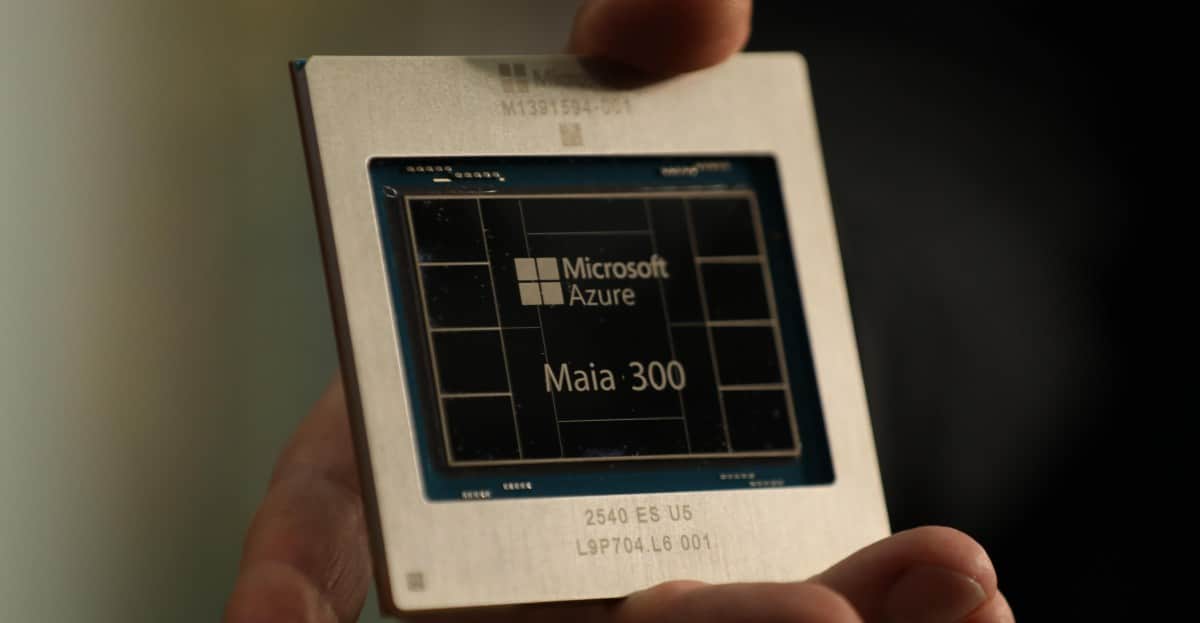
Image: The Register
Microsoft has withdrawn from the Loughton, Essex, data-center project that was intended to house Britain’s largest sovereign AI deployment, leaving Nscale without a publicly identified anchor customer for the site. The reported reason is not a shortage of Nvidia hardware or a change in the facility’s proposed scale. It is obtaining enough electricity.
The project announced in September 2025 called for 23,040 Nvidia GB300 GPUs in a 50MW facility, with capacity to expand to 90MW. Microsoft was to use the system for Azure cloud services, and the original plan put the first chips in place in early 2027. But UK Power Networks warned that the required capacity may not be available until the early to mid-2030s.
Microsoft characterized the withdrawal narrowly:
“We remain committed to our partnership with Nscale, including work to build robust digital infrastructure and support AI growth globally. This decision relates to a single site.”
The statement preserves the commercial relationship but makes no commitment to Loughton. Microsoft has not publicly detailed the agreement, its termination terms, the amount of capacity it had reserved, or whether the GPU allocation will move to another Nscale location.
A 50MW design without a 50MW connection
The Loughton plan shows the mismatch between data-center announcements and utility timelines. The facility’s compute design was specified: 23,040 GB300 GPUs, a 50MW initial build, and a potential 90MW expansion. Its power path was not. Although a data center can connect to a distribution network, the limiting work may sit on the separate national transmission network.
Recommended reading
AMD’s agent rack turns AI deployment into a facility project
Sergey Kuznetsov • • 7 min read
A UK Power Networks spokesperson said it could not discuss individual connections because of obligations under Section 105 of the Utilities Act. The utility gave a broader explanation for projects in this position:
“However, in general, many datacenters, whilst they can connect to our distribution network, are awaiting works on the national transmission network which we do not own.”
A developer can have land, a planned building, hardware commitments and a local connection process underway, yet still be blocked by transmission upgrades outside its control. A 2027 chip-arrival target does not solve an early-to-mid-2030s power-capacity problem.
| Milestone | Reported status |
|---|---|
| September 2025 | Microsoft and Nscale announced the Loughton project: 23,040 GB300 GPUs, 50MW initially, with a path to 90MW |
| March 2026 | The proposed site was reported to still be operating as a scaffolding yard |
| Early 2027 | Original target for the first chips to arrive |
| Early to mid-2030s | Period when the needed grid capacity may become available |
The schedule has been described in two ways. The original project plan targeted early 2027 for the first chips. Separate reporting described the facility as unlikely to be online until 2030 or later because of the power constraint. The dates are not necessarily contradictory: one is a hardware-deployment target, while the other describes when a fully powered facility may be viable. The project’s public problem is that neither date has been reconciled into an operating schedule.
Nscale still has a site, but no public replacement customer
Nscale says it has cleared the Loughton land and remains committed to the project. The company says it is considering alternatives to the grid connection rather than abandoning the location.
“We remain committed to both the Loughton project and the UK and we are exploring alternative power sources for the site, in addition to other expansion sites in the UK. Our relationship with Microsoft remains strong and long-term, and this unfortunate London-wide grid issue has no impact on our other contracts.”
Nscale did not identify an alternative power technology, its capacity, its delivery date, whether it could support the full 50MW first phase, or the operating implications of using it. It also did not announce a replacement customer for the Loughton deployment.
The facility was pitched as a sovereign UK AI data center. Microsoft was expected to consume the capacity through Azure. Without a named tenant, the public plan consists of a cleared site, a large GPU design, and an unresolved power strategy.
The withdrawal also arrives as Nscale prepares for a possible public offering. The company announced $3.36 billion in pre-IPO convertible financing in late September 2026, a structure used ahead of a potential listing. Separate reporting put Nscale’s expected Wall Street valuation at $35 billion, while also saying Microsoft represents 40% of Nscale’s currently contracted revenue and is one of its two largest clients. Neither Microsoft nor Nscale has publicly confirmed the reported revenue share or prospective valuation.
A customer accounting for 40% of contracted revenue and withdrawing from a flagship site are distinct risks, even if the two companies retain other business together. Nscale has three U.S. facilities, according to the reporting, so the Loughton project is not its entire physical footprint. But it was a UK deployment attached to both a large Microsoft investment pledge and a pre-IPO narrative.
Connection queues are becoming the capacity constraint
The Loughton failure sits within a much larger UK connection backlog. Demand for new connections reportedly rose from 41GW to 125GW in less than a year, and data centers account for at least 80GW of that demand. Ofgem proposed charging developers for connection requests earlier in 2026 to discourage speculative projects from occupying queue positions.
| Connection-demand measure | Reported figure |
|---|---|
| New connection demand less than a year earlier | 41GW |
| New connection demand after the surge | 125GW |
| Data-center demand within that total | At least 80GW |
The numbers do not establish how much of the 125GW queue will be built, but they show why a nominal connection request is a poor proxy for a usable data-center site. Developers are competing for transmission work that may take years and for community acceptance once projects near residential areas.
Some UK developers have turned to gas-powered generation rather than wait for grid connections. That can shorten dependence on transmission upgrades, but Nscale has not said whether gas generation is among its options, whether any on-site power would be temporary or permanent, or how such a system would change the facility’s economics and emissions profile. Those details are needed to evaluate an “alternative power” plan as a replacement for grid supply rather than a placeholder.
The problem is not confined to the UK. In August, we reported that Texas had paused data-center grid approvals for audits, covering more than 1,800 connection projects, roughly 90% of them data centers, amid concerns over electricity and water demand. Loughton shows the same planning collision: cloud capacity can be financed and advertised faster than generation, transmission, and local approvals can be delivered.
The investment headline no longer matches the construction reality
Loughton formed part of Microsoft’s £22 billion UK investment announcement in September 2025. The proposed hardware scale gave that pledge a physical project. Just over a year later, Microsoft’s exit leaves Nscale to assemble a power plan and a tenant base independently.
Both companies say their broader relationship continues. But a GPU commitment and a data-center announcement do not amount to near-term compute capacity. At Loughton, the chips were specified, the site was identified, and the customer was known. The electricity was the missing dependency.
The relevant milestone is a dated, funded plan for how the first 50MW will be powered—and whether that plan can support the 23,040-GPU deployment without waiting for the 2030s.
Frequently asked questions
Why did Microsoft leave the Nscale Loughton project?+
Microsoft said its decision concerned a single site. The project faces a power constraint: the needed grid capacity may not be available until the early to mid-2030s.
How large was the planned Loughton AI data center?+
The September 2025 plan called for 23,040 Nvidia GB300 GPUs in a 50MW facility, with room to expand to 90MW.
Is Nscale canceling the Loughton data center?+
No. Nscale says it remains committed to Loughton and is exploring alternative power sources, but it has not identified a replacement customer or detailed the power plan.
When was the Loughton facility supposed to start operating?+
The original plan targeted the first chips in early 2027. Reporting on the grid constraint said sufficient power might not be available until the early to mid-2030s.

Editor-in-Chief
Sergey Kuznetsov is Head of Product at iXBT.com, one of the largest Russian-language technology media outlets, and the founder of itzine.ru. He has spent over a decade building and running tech newsrooms. At for(geeks) he sets editorial standards and reviews what ships.