• 7 min read
Starlink Mobile can’t replace carriers from orbit alone
SpaceX has spectrum and FCC approval for 15,000 direct-to-device satellites, but its mobile plan still requires a costly terrestrial network.
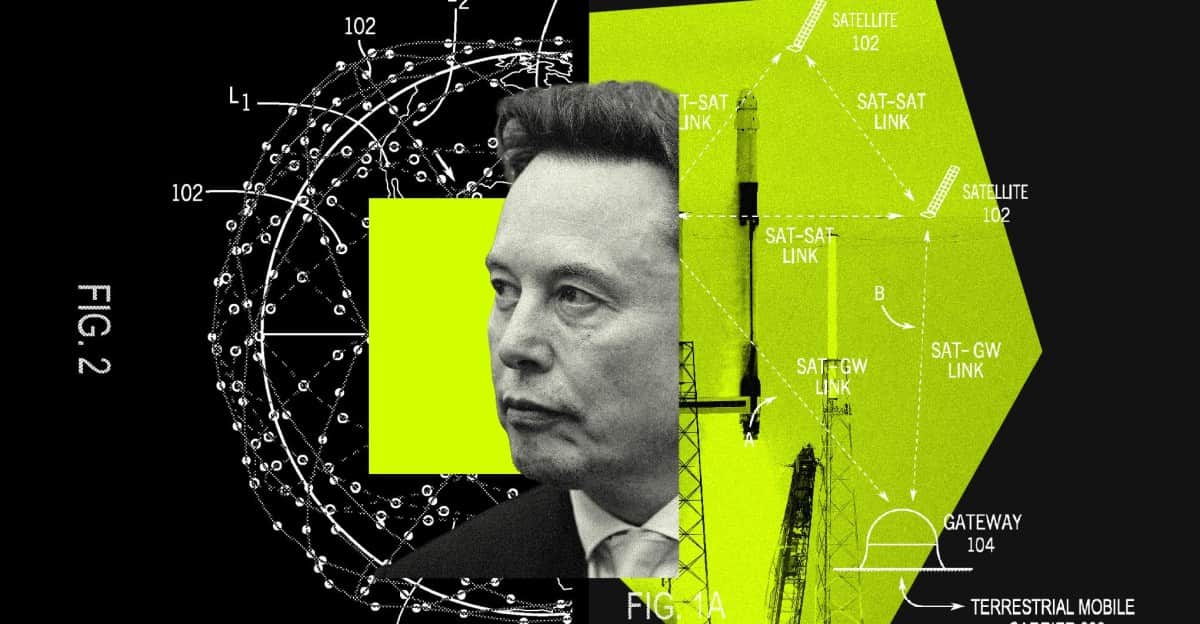
Image: The Verge
SpaceX’s bid to turn Starlink into a US mobile carrier is no longer limited to satellite-to-text. The company has acquired low-band spectrum, won authorization for a 15,000-satellite next-generation direct-to-device constellation, and outlined a service that could carry voice, messaging, and high-speed data to compatible phones.
The harder part is terrestrial. The 800 MHz spectrum purchase, reported at $8 billion, gives SpaceX low-band airwaves that propagate farther and penetrate buildings better than higher-frequency spectrum. It is a foundation for conventional ground coverage, not something satellites can provide by themselves.
SpaceX has separately committed nearly $20 billion for EchoStar spectrum. Together, those purchases support the company’s stated ambition to build “the world’s most advanced mobile network” and require both an orbital access layer and a terrestrial radio network. Prior would-be fourth US carriers have struggled with the latter.
What the FCC authorization covers
The authorized Starlink Mobile system is larger than SpaceX’s current direct-to-device operation. It permits 15,000 satellites in nine very-low-Earth-orbit shells between 326 km and 335 km above Earth. The supplied authorization details say the constellation can provide mobile satellite service outside the US, supplemental in-country coverage from space, and fixed-satellite backhaul in addition to direct-to-device service.
The lower orbit is intended to reduce latency and improve performance. But it does not remove the radio constraints of connecting an ordinary phone to space: phones have limited transmit power, indoor reception is difficult, and capacity must be shared across a coverage area. The proposed system therefore combines satellite coverage with spectrum acquired from EchoStar and supplemental coverage from space rather than treating the orbital network as a complete substitute for cell sites.
| Direct-to-device network stage | Satellite count | What it represents |
|---|---|---|
| Existing Starlink direct-to-device network | Approximately 650 | Current operating constellation |
| Authorized next-generation Starlink Mobile network | 15,000 | Planned VLEO constellation across nine orbital shells |
SpaceX filed for the system in September 2025. The authorization removes a requirement that it lease spectrum from terrestrial carriers, allowing operation with its own authorized spectrum. Carrier partnerships can help a satellite operator reach subscribers, but they also leave it dependent on the networks it hopes to challenge.
The authorization is not unrestricted. Decisions on some requested spectrum operations, including certain bands used or reserved for federal purposes, were deferred. Conditions also apply to transfer of the EchoStar spectrum licenses. Portions of the eventual radio plan remain unresolved, even though the central constellation has been approved.
Why the 800 MHz purchase changes the plan
The newly acquired 800 MHz licenses trace back to Nextel’s push-to-talk network. Sprint had to divest the spectrum as part of its acquisition by T-Mobile; it was later sold to Grain Management after EchoStar, then led by Charlie Ergen’s Dish, did not complete a planned purchase.
For SpaceX, the appeal is essential. Low-band spectrum delivers wide-area coverage with fewer sites than higher-frequency holdings and improves the odds of usable indoor service. It is the spectrum layer a national mobile carrier needs for broad terrestrial coverage, even if its satellite network fills areas where a ground footprint is uneconomic or unavailable.
“When you realize that you need to build a terrestrial network to support what you’re doing with satellites, because satellites work fine if you’ve got your dish on the top of your house and you’re getting your broadband, but when you’re trying to connect with a phone that doesn’t have the same type of power or you’re going inside a home, you’re going to need better coverage.”
The $8 billion transaction shows that a phone service needs ground infrastructure. SpaceX can use its satellites for coverage continuity and remote areas, but under the announced plan it cannot build an urban or indoor mobile experience exclusively from orbit.
The source material does not identify how many ground sites SpaceX intends to deploy, where those sites will be built, which radio vendors it will use, or what its backhaul architecture will be. It also does not establish a wholesale roaming agreement with AT&T, T-Mobile, or Verizon. Spectrum licenses alone do not deliver a usable national network; they require radio access equipment, transport, site access, operations, and enough capacity to carry traffic at busy times.
The fourth-carrier precedent is not reassuring
The 800 MHz licenses became available because the policy case for a new nationwide competitor had already failed once. Regulators required T-Mobile to part with low-band spectrum during the Sprint transaction in part because Dish was expected to become a fourth US carrier. Dish built a network, used open RAN and AWS to reduce costs, and relied on wholesale agreements, but it did not become a national retail rival on the scale of the three incumbents.
That history is not proof that SpaceX will fail. SpaceX has a global satellite operation, an existing Starlink customer base, launch capability, and more financial latitude than Dish had. Its direct-to-device system also starts with an access layer that Dish never possessed. But those advantages do not change the economics of nationwide terrestrial coverage.
“The point is it’s going to take time. You can’t just turn on a network overnight and start selling service on that.”
The sequencing described in the reporting is familiar: sell a service using available network assets, use satellites for coverage benefits, then add terrestrial capacity over time. That can work if SpaceX gains customers before its own radio footprint is complete. It also means early customers may not receive a service delivered predominantly on SpaceX-owned ground infrastructure.
That distinction matters for US buyers. A satellite-connected phone plan aimed at emergency communications and coverage outside cellular range is narrower than a replacement for an AT&T, T-Mobile, or Verizon primary line. The current material supports the first category today in architectural terms and outlines an aspiration toward the second; it does not provide retail pricing, plan limits, compatible handset models, launch markets, or performance measurements for the future service.
Deployment deadlines make this a long build
SpaceX President and COO Gwynne Shotwell has indicated that deployment of second-generation Starlink Mobile satellites is planned for 2027, with service expected by the end of that year. The authorization contains longer construction milestones: at least half the constellation must be deployed and operating by October 7, 2032, and all 15,000 satellites by October 7, 2035.
| Date or deadline | Required or planned milestone |
|---|---|
| September 2025 | SpaceX filed its application for the new satellite system |
| 2027 | Planned start of second-generation Starlink Mobile satellite deployment |
| End of 2027 | Expected start of service |
| October 7, 2032 | At least half of the authorized constellation must be deployed and operating |
| October 7, 2035 | Full 15,000-satellite constellation deployment deadline |
The authorization lasts 15 years beginning when the first satellite enters its authorized orbit. Approval for 15,000 satellites does not create an instant nationwide carrier. It authorizes a buildout measured in years, and the terrestrial component has its own unstated timeline.
Starlink’s advantage is coverage, not a cheaper network
SpaceX can combine terrestrial spectrum with satellites rather than choosing between them. In remote regions, during outages, and beyond conventional tower coverage, that can distinguish its product. The company is also authorized to use the system for fixed-satellite backhaul, which could connect other network infrastructure where terrestrial transport is difficult.
But the plan is not a low-cost escape from carrier infrastructure. It adds 15,000 VLEO satellites to the cost of acquiring spectrum and building or accessing ground capacity. A conventional carrier already bears the latter costs; SpaceX will bear both. The trade-off makes sense only if the satellite layer creates enough coverage and customer value to offset that extra capital burden.
The 800 MHz deal is the more concrete competitive signal than the headline satellite count. Satellites give Starlink reach, but low-band terrestrial spectrum gives it a route toward the indoor coverage and broad-area capacity expected of a primary mobile provider. Until SpaceX identifies its retail plans, roaming arrangements, handset support, ground-network scale, and real-world capacity, it has the ingredients for a fourth-carrier strategy—not a demonstrated replacement for the carriers Americans use today.
Frequently asked questions
When will Starlink Mobile service begin?+
SpaceX President and COO Gwynne Shotwell indicated that second-generation Starlink Mobile satellites are planned for deployment in 2027, with service expected by the end of 2027.
How many Starlink Mobile satellites did the FCC approve?+
The authorization covers 15,000 satellites operating in nine very-low-Earth-orbit shells at altitudes from 326 km to 335 km.
Will Starlink Mobile replace AT&T, T-Mobile, or Verizon?+
The announced plan points toward a broader mobile network, but it does not establish retail pricing, compatible handsets, roaming agreements, ground-site plans, or measured performance for a replacement primary service.
Why did SpaceX buy 800 MHz spectrum?+
Low-band 800 MHz spectrum supports broad coverage and better building penetration. It gives SpaceX spectrum for a terrestrial mobile network alongside satellite coverage.

Editor-in-Chief
Sergey Kuznetsov is Head of Product at iXBT.com, one of the largest Russian-language technology media outlets, and the founder of itzine.ru. He has spent over a decade building and running tech newsrooms. At for(geeks) he sets editorial standards and reviews what ships.