• 2 min read
An “oxygen tunnel” could make 3D AI memory more reliable
KAIST researchers designed a SiN/SiO₂/SiN structure that controls oxygen migration in 3D memory and survived more than 10 million stress cycles.
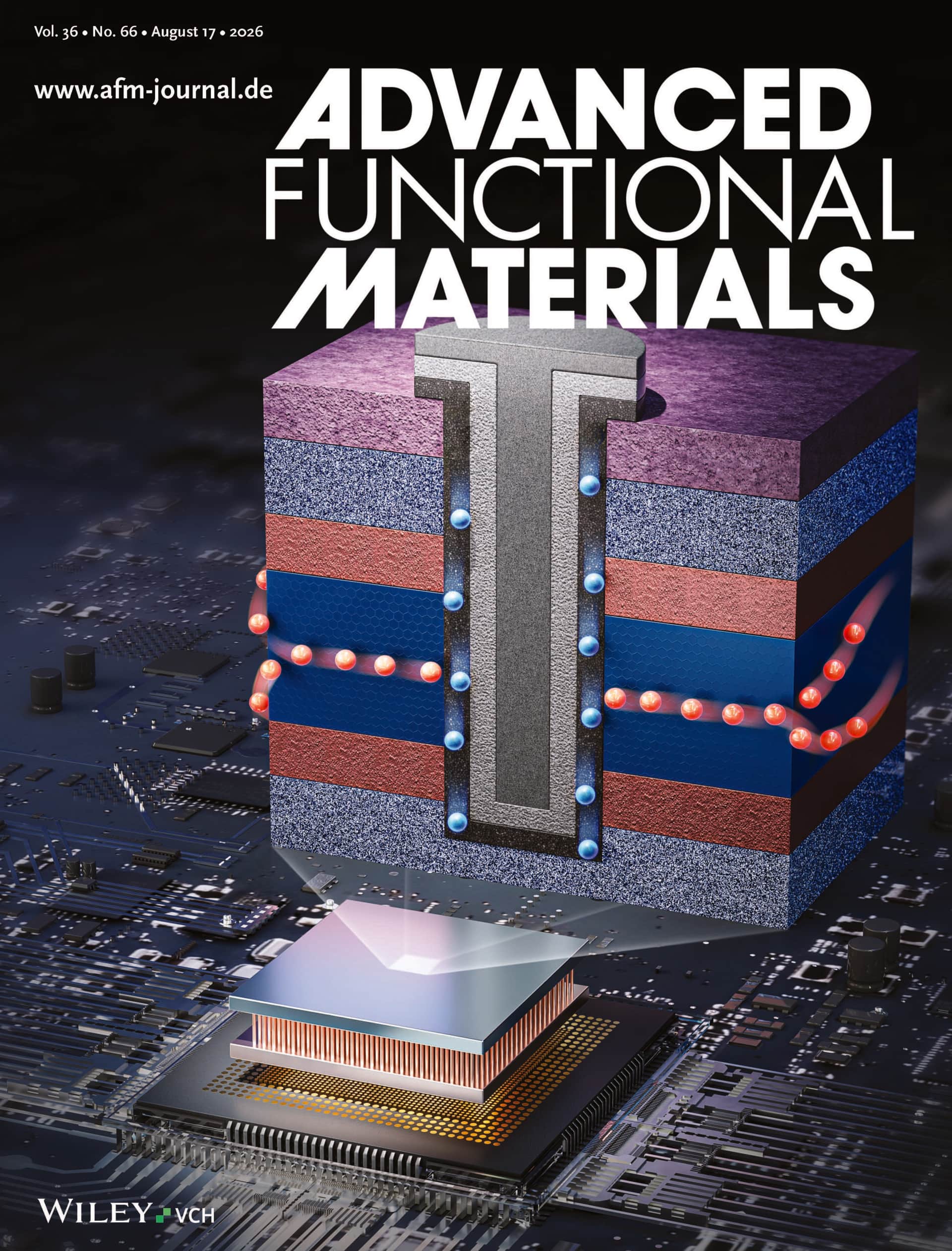
Image: Techxplore
A KAIST research team has developed an “oxygen tunnel” structure designed to improve the reliability of vertically stacked memory for AI chips. Techxplore reports that the approach addresses a key defect problem in oxide vertical channel transistors, a potential building block for denser compute-in-memory systems.
How the oxygen tunnel works
The devices use oxide semiconductors, where missing oxygen atoms—known as oxygen vacancies—can destabilize electrical behavior. Supplying oxygen can repair those vacancies, but unrestricted migration creates another failure mode: oxygen can reach the metal electrode and oxidize it.
KAIST researchers, led by Professor Jimin Kwon of the School of Electrical Engineering, built a multilayer interlayer dielectric from silicon nitride/silicon dioxide/silicon nitride (SiN/SiO₂/SiN). The structure is intended to direct oxygen toward the oxide channel while blocking its movement toward the electrode.
That selective control is designed to resolve the central trade-off: the channel needs oxygen to remain stable, while the electrode must be protected from oxidation.
The resulting oxide vertical channel transistors achieved what the researchers described as world-class current density and data-retention time. In electrical stress testing, the devices endured more than 10 million cycles, while their threshold-voltage shift stayed below 50 millivolts.
The team also combined the oxide semiconductor platform with conventional silicon CMOS technology to assess its potential in compute-in-memory (CIM) systems. CIM architectures perform AI calculations inside memory, reducing the need to repeatedly move data between separate memory and processing components.
“This research is significant because it goes beyond improving memory density and addresses the long-standing instability problem in 3D devices through a new approach based on oxygen migration control.”
Gu said the technology could help accelerate commercialization of “ultra-low-power, high-performance compute-in-memory systems required for the AI era.” The study was conducted with researchers from UNIST, Yonsei University and other Korean institutions, and was published in Advanced Functional Materials under the title “Oxygen-Tunnel Indium Tin Oxide Vertical Channel Transistors with Enhanced Current Density and Reliability for Monolithic 3D Compute-In-Memory Systems.”
The report establishes improved device reliability and system-level potential, but does not provide a commercialization timeline or show performance from a production-scale memory chip.

Editor-in-Chief
Sergey Kuznetsov is Head of Product at iXBT.com, one of the largest Russian-language technology media outlets, and the founder of itzine.ru. He has spent over a decade building and running tech newsrooms. At for(geeks) he sets editorial standards and reviews what ships.