• 6 min read
IFA 2026: LG AXIUM actuators and CLOi robots target big-tech orders
LG is pursuing big-tech actuator contracts at IFA 2026, with 100,000-RPM motors and an automated production line planned before year-end.
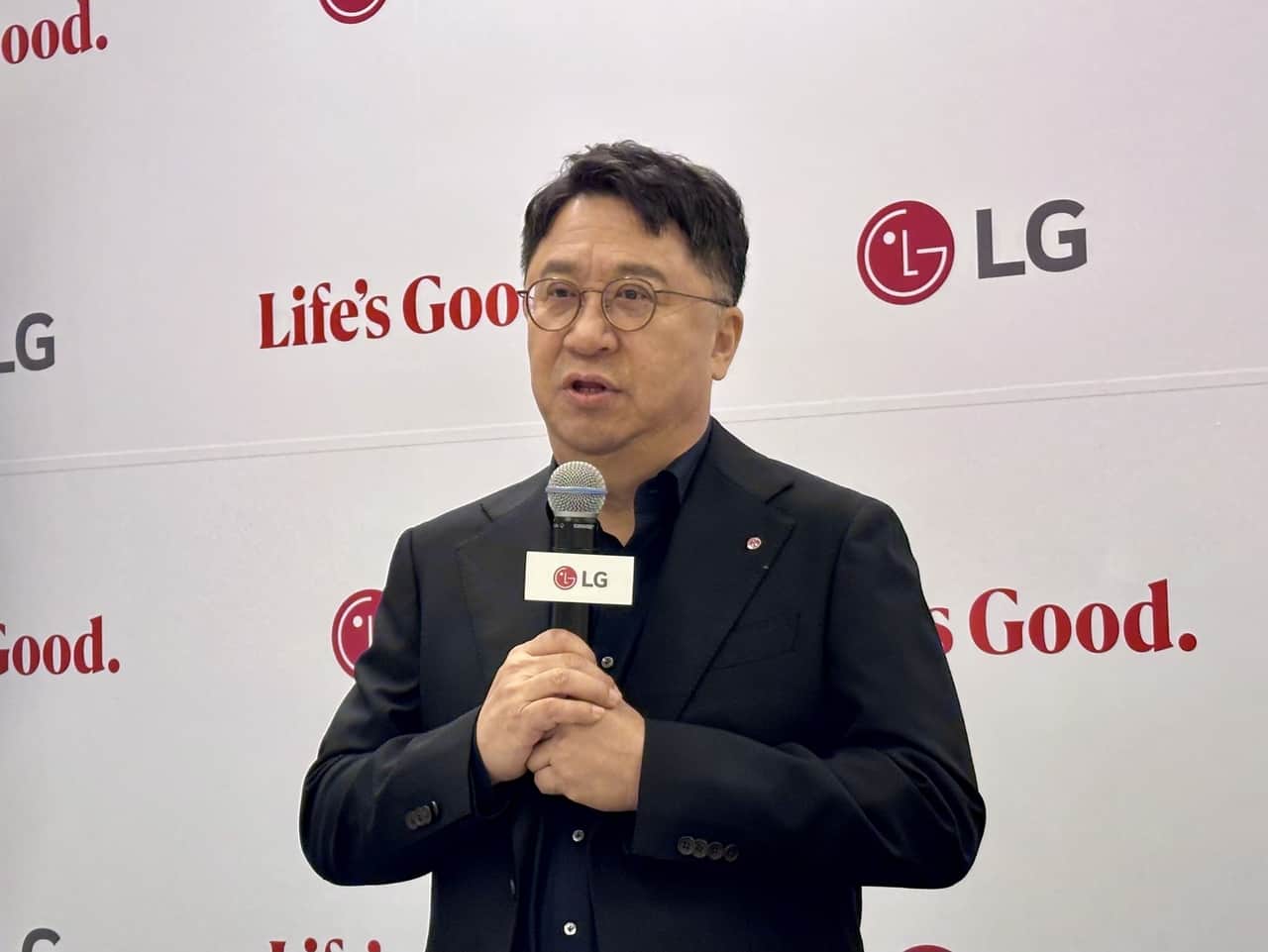
Image: Biz Heraldcorp
LG Electronics is pursuing robot actuator supply contracts, saying at IFA 2026 in Berlin that it is in advanced discussions with several large technology companies. The company expects actuator sales to approach the scale of its established air-conditioner compressor business within one to two years, although no customer or contract has been disclosed.
“We are in active talks with several big-tech companies over actuator orders. Nothing is finalized yet, but we have only a final meeting left with one particular company next month, and I am eager to share the news as soon as possible.”
LG is seeking to become a component supplier to robot makers, using motor and drive-control capabilities developed through six decades of appliance manufacturing. The company is not limiting its robot strategy to household products.
LG launched the LG AXIUM actuator brand earlier in 2026. It plans to finish a fully automated actuator mass-production line at its Changwon factory before the end of 2026, then begin full-scale order activity. The company has not said how many actuators the line will produce, which customers it is designed for, or what the components will cost.
The actuator design is strong on motors, incomplete on reducers
An actuator combines three functional elements: a motor to generate force, a reducer to transmit that force, and a driver to control the system. LG says its motor technology can exceed 100,000 revolutions per minute, allowing it to build motors that are more than 30 percent lighter and smaller than competitors' motors.
Smaller motors can reduce the size and mass of a joint, while lower weight can help limit the power required to move the robot. But the source does not provide torque, efficiency, noise, thermal limits, duty cycle, or independent test conditions, so the size and weight claim cannot yet be evaluated as a complete actuator comparison.
LG also acknowledged a gap in its planned component stack: it has not yet secured reducer technology. Baek said the company is considering both internal development and external sourcing. AXIUM’s ability to become a complete, vertically controlled actuator platform will therefore depend partly on technology LG does not currently claim to possess.
| Actuator element | LG’s position at IFA 2026 |
|---|---|
| Motor | More than 100,000 RPM; LG says its motors are more than 30% lighter and smaller than competitors' |
| Reducer | Not yet secured; LG is evaluating in-house development and external sourcing |
| Driver | Included in the actuator architecture, with LG citing its drive-control expertise |
A buyer could source a motor and driver from LG while treating the reducer as a separate procurement or development problem. LG’s planned mass-production line may improve cost and consistency, but the company has not said whether it will sell complete actuators or modular components for customers to assemble.
CLOi shows the application, but not the commercial customer
At IFA 2026, LG also used its LG CLOi home robot in an AI-powered orchestra performance. CLOi uses wheel-based autonomous driving technology, giving LG an example of a form factor suited to indoor movement but different from the bipedal humanoids attracting much of the industry’s attention.
Baek said LG is preparing for multiple robot designs rather than committing to a single humanoid template. Wheeled platforms may suit homes and other environments where stability and efficient movement matter. A production-line robot, by contrast, may need neither legs nor a head, depending on the task.
“Both wheel-type and bipedal-type robots have their pros and cons. A robot assembling products on a washing machine production line has no need for legs or a head, so we are preparing a full range of robot forms depending on the operating environment.”
LG says the robot business is being managed at the company-wide level, while the HS division is responsible specifically for actuators. This lets LG pursue component revenue even when a final robot product is designed or sold by another part of the company—or by an external customer.
The company’s timing is based on an industry forecast that humanoid robot demand will reach an inflection point around 2030, when adoption is expected to expand beyond industrial sites and into homes. That forecast is not an LG sales result or an independently established market measurement. For now, the concrete milestones are the Changwon production line and the pending customer discussions.
LG is treating cost volatility as a permanent operating condition
The actuator plan arrives alongside a broader effort to defend LG’s appliance business against Chinese manufacturers that have competed aggressively on price. Baek said the three largest Chinese appliance makers had previously reduced costs by about 10 percent annually, but that their costs increased during the first half of 2026.
His argument is that sustained low-price competition becomes harder as Chinese manufacturers pursue more global market share. LG says it has responded by changing its supply chain, using parts of China’s industrial ecosystem, and adjusting production across 12 facilities in 10 countries.
“We have made many changes to our supply chain to compete with Chinese brands and have also leveraged the Chinese ecosystem. Through flexible adjustments across our 12 production bases in 10 countries worldwide, our underlying strength has been steadily improving.”
That flexibility is also intended to absorb currency, raw-material and shipping volatility. LG no longer treats exchange rates and logistics costs as temporary variables, Baek said, but as a constant feature of the business. The company expects logistics costs to decline from the fourth quarter as supply and demand rebalance, although it said a dispute between shipowners and cargo owners was still keeping freight prices under pressure.
The approach may help LG manage a robot-components business whose customers are likely to demand predictable pricing and delivery. LG has described its manufacturing footprint and cost strategy, but has not provided AXIUM pricing, production capacity, margin targets or a confirmed purchase order.
IFA remains a B2B sales channel for LG
LG’s continued presence at IFA also has a commercial purpose. Samsung Electronics moved out of the main Messe Berlin exhibition hall and established a separate venue in central Berlin, prompting questions about whether the trade show still carries the same influence. LG said it has no plans to leave.
“What sets IFA apart from other trade shows is the opportunity to hold consultations with business partners.”
That emphasis fits LG’s broader plans for European built-in appliances, including its ultra-premium SKS and mass-premium LG Signature brands. For AXIUM, the value of IFA is less the public CLOi demonstration than the private meetings that could turn an unconfirmed actuator discussion into a named customer and a production commitment.
LG has set a near-term manufacturing deadline, but a signed order, a disclosed reducer solution, and performance data under operating conditions that robot makers can compare with competing actuators are still missing.
Frequently asked questions
What is LG AXIUM?+
LG AXIUM is a dedicated actuator brand for robots. LG says the actuator architecture includes a motor, reducer and driver.
When will LG start mass-producing AXIUM actuators?+
LG plans to complete a fully automated actuator mass-production line at its Changwon factory before the end of 2026, followed by full-scale order activity.
Has LG signed a robot actuator customer?+
No. LG says it is in active talks with several big-tech companies, but no contract or customer has been finalized publicly.
Does LG have its own reducer technology?+
LG has not yet secured reducer technology. It is considering developing reducers internally or sourcing them from outside suppliers.

Editor-in-Chief
Sergey Kuznetsov is Head of Product at iXBT.com, one of the largest Russian-language technology media outlets, and the founder of itzine.ru. He has spent over a decade building and running tech newsrooms. At for(geeks) he sets editorial standards and reviews what ships.