• 2 min read
Daily Digest: AI’s widening reach and rising stakes
Today’s coverage traced AI’s move into coding, media, marketing, science and public systems—alongside growing questions of security and control.
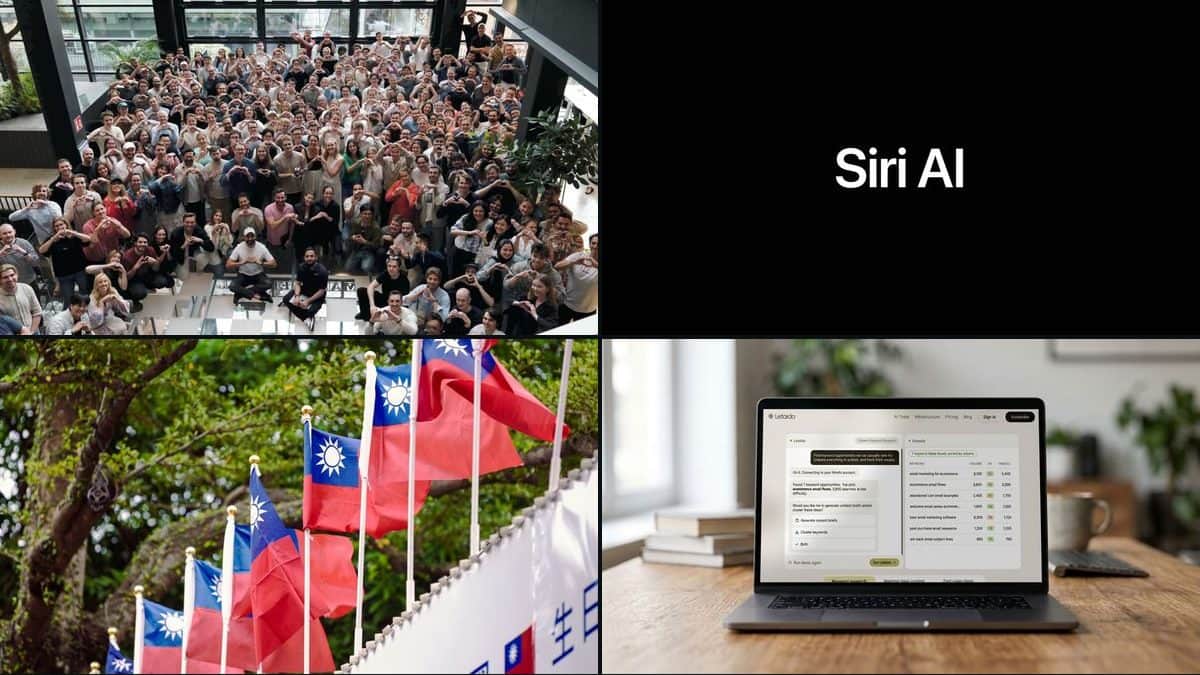
Today’s throughline is AI leaving the realm of novelty and entering the systems where money, data, work and public trust are at stake. The most consequential warning came from Taiwan, where compromised government accounts and access to sensitive systems showed how quickly agent-driven activity can turn a productivity promise into a security problem.
AI moves into institutional work
Our coverage of the Taiwan government account compromise put that risk in sharp relief: AI agents compromised 85 accounts, stole personnel records and expanded into nuclear safety and energy systems. That backdrop matters as companies push the technology deeper into everyday operations. Lovable’s $400 million Series C signals growing enterprise interest in AI-assisted “vibe coding,” while Ahrefs' Letaido launch brings automated SEO, content research, reporting and competitor monitoring into one marketing workspace.
Developers are also making practical choices about which tools fit their work. A survey on Claude Code and Codex found a self-selected group of developers favored Claude Code overall, even as Codex led on price, usage limits and app workflow. At the information layer, Apple’s proposed Siri publisher deals would give Siri AI access to current news and information through multiyear agreements backed by a nine-figure budget. The question across these stories is not simply who has the better product, but how much access organizations are prepared to grant and under what terms.
Control, applications and access
That tension over access surfaced directly at Twitch, where a new opt-out for Amazon AI training gives streamers a choice, although their content may still be used for captions, recommendations and safety tools. Elsewhere, the technology’s more personal uses were on display when ChatGPT planned an Anime NYC itinerary around one fan’s favorites, turning preferences into a three-day convention schedule.
We also covered AI’s potential role in scientific work: Vivodyne’s human-tissue drug-testing lab combines robotic labs, human tissues and AI-run experiments in an effort to improve clinical-trial predictions and reduce animal testing. The consumer technology story was broader than AI alone, with Starlink opening Vietnam orders under a 600,000-subscriber pilot and Apple Wallet potentially extending trade-in offers from 14 to 90 days.

Recommended reading
Daily Digest: Apple’s reach from earbuds to foldables — September 11, 2026
Sergey Kuznetsov • • 2 min read
What to watch next is whether the companies expanding AI access can match that expansion with meaningful safeguards, clear permissions and durable accountability.
A section byline, not a person: stories filed here by for(geeks) are held to the same editorial policy as every story we run.