• 6 min read
US lab probes Chinese lidar for hidden security risks
Idaho National Laboratory is reviewing Chinese lidar used in autonomous vehicles, amid concerns over data collection, supply chains and remote disruption.
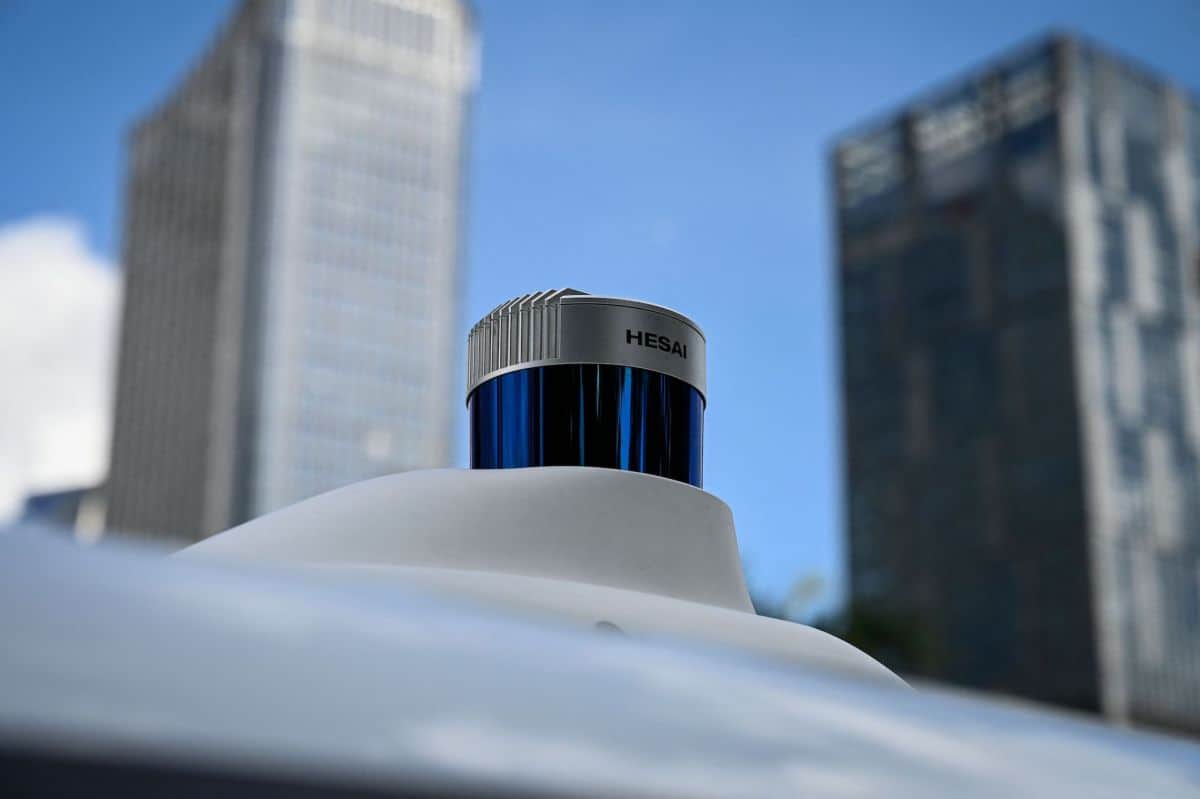
Image: Techcrunch
Chinese lidar sensors used in autonomous vehicles are being examined for potential security vulnerabilities by a US Department of Energy laboratory, as lawmakers push to restrict the technology on American roads. TechCrunch reports that Idaho National Laboratory is conducting the review for a company—or group of companies—in the electric and autonomous-vehicle industries.
Two people familiar with the effort told TechCrunch that the laboratory is investigating whether Chinese lidar could create risks if it becomes widely deployed on vehicles in the United States. The sources were granted anonymity because they were not authorized to discuss the work publicly. The identity of the company or companies funding the research is not known.
Representatives for Rivian, General Motors, Ford, Kodiak, Lucid Motors, Nuro and Uber told TechCrunch they were not aware of the review. Nvidia, Zoox and Aurora did not respond to questions about whether they are involved. Idaho National Laboratory also declined to comment. In statements to TechCrunch in June and July 2026, a spokesperson said: “this isn’t a project that we’re at liberty to discuss with reporters.”
China’s two leading lidar suppliers, Hesai and RoboSense, did not respond to multiple requests for comment. Both companies have been placed by the US Department of Defense on its so-called 1260H list, which identifies companies the department alleges support the People’s Liberation Army and limits their ability to work with the US military. That designation does not by itself ban the sensors from civilian vehicles.
How Chinese lidar could create a security problem
Lidar—short for light detection and ranging—fires laser pulses to measure the distance to nearby objects. Autonomous-driving systems use it to build a high-resolution view of a vehicle’s surroundings, complementing cameras and radar.

Recommended reading
Capcom’s 11.8 million-account breach makes phishing the immediate risk
Sergey Kuznetsov • • 7 min read
Omer Keilaf, CEO and co-founder of Israeli lidar company Innoviz, said the risks fall into several categories. One is supply-chain dependence: an automaker that builds its autonomy system around Chinese hardware could become reliant on a strategically important technology controlled by a foreign supply chain.
“So, if, for example, an OEM now builds its entire autonomous driving stack based on a Chinese supply chain, that’s a huge risk down the road.”
The Idaho review is focused more specifically on cybersecurity, according to the two people familiar with it. They said the work could ultimately identify vulnerabilities—or provide Chinese-made lidar with a clean bill of health in that area.
Keilaf described two possible attack scenarios. A lidar system could potentially be disabled at scale, disrupting vehicles that are in motion and leaving parked vehicles unusable. Researchers have previously shown that individual lidar sensors can be disabled with lasers, although it is not clear how an attacker could coordinate a widespread shutdown of sensors used by robotaxis.
The second concern involves the detailed environmental data lidar collects. Keilaf said the information could be compressed and transmitted through a cellular chip, potentially allowing someone to extract data about a vehicle’s surroundings. The source does not establish that Chinese lidar vendors are doing this, and the review’s findings have not been disclosed.
“As a person that spent seven years in the [Israeli] intelligence force, I can assure you, it’s not very difficult to extract that information. Eventually, the amount of data that the lidar is generating is pretty easily compressed if someone wants to.”
Falling prices are driving adoption
The security debate has intensified as lidar has become dramatically cheaper. A product that could cost as much as $75,000 a decade ago can now cost only a few hundred dollars in some cases, after Chinese suppliers scaled production and reduced prices.
That cost advantage matters because lidar was traditionally far more expensive than cameras and radar. American suppliers have struggled to match China’s economies of scale and lower labor and capital costs. Several US lidar companies have consolidated, while Luminar has filed for bankruptcy.
Tesla has rejected lidar entirely. CEO Elon Musk has described it as a “crutch” and built Tesla’s autonomy strategy around cameras instead. Other automakers and autonomous-vehicle companies, however, continue to consider lidar as part of a broader sensor suite.
Rivian is reportedly among them. The company plans to offer a version of its R2 SUV with a roof-integrated lidar sensor. In March 2026, CEO RJ Scaringe told Reuters that Rivian was considering producing lidar in the United States by leveraging Chinese technology, potentially through a joint venture. He said the effort could involve other automakers and that Rivian was in “active discussions” with lidar companies. Rivian’s chief financial officer later said the company had no plans to bring lidar development in-house.
“A number of different car manufacturers are thinking about how they could do that either together, or at least through a shared alignment to say, hey, let’s develop production capacity in the United States for this, or at least outside China.”
US restrictions remain incomplete
US companies can currently use Chinese-made lidar in passenger vehicles. A 2025 Commerce Department rule prohibits Chinese-made connectivity hardware in US passenger cars, but it does not cover lidar or other autonomous-vehicle sensors.
That could change. Senator Tammy Baldwin, a Democrat from Wisconsin, is working with Senator Ted Budd, a Republican from North Carolina, on the Securing Infrastructure from Adversaries Act. The bill addresses concerns that Chinese lidar could be used for military or industrial espionage and that taxpayer funds might support technology capable of surveillance.
“As infrastructure becomes more sophisticated, the threat Chinese LiDAR technology poses to American communities and our national security cannot be allowed to go unchecked. We need to be doing more to protect Americans and that starts with ensuring taxpayer dollars aren’t being used to purchase technologies that could be used to spy on us.”
Congressman John Moolenaar, a Michigan Republican, is co-sponsoring separate legislation aimed at banning Chinese lidar. Congressman Raja Krishnamoorthi, an Illinois Democrat, introduced that bill and has warned that widespread adoption could allow China to gather sensitive data or disrupt US systems.
There is at least one documented example of lidar-related disruption, although it was not described as a cyberattack. In early 2024, vehicles using Hesai lidar suddenly stopped working for an entire day because the company had failed to account for the additional day in the leap year. The incident shows how a software or engineering mistake can affect an entire fleet, but it does not establish that Chinese suppliers can remotely disable vehicles at scale.
The Idaho National Laboratory review could therefore become significant whether it uncovers a vulnerability or finds no evidence of one. For now, the case for restricting Chinese lidar rests on supply-chain and espionage concerns, while the specific cybersecurity threat remains unproven.
A section byline, not a person: stories filed here by for(geeks) are held to the same editorial policy as every story we run.