• 7 min read
OpenAI’s ChatGPT for Teens faces immediate safety doubts
OpenAI’s age-gated ChatGPT for Teens adds parental alerts and stricter rules, but experts say its safeguards need independent testing.
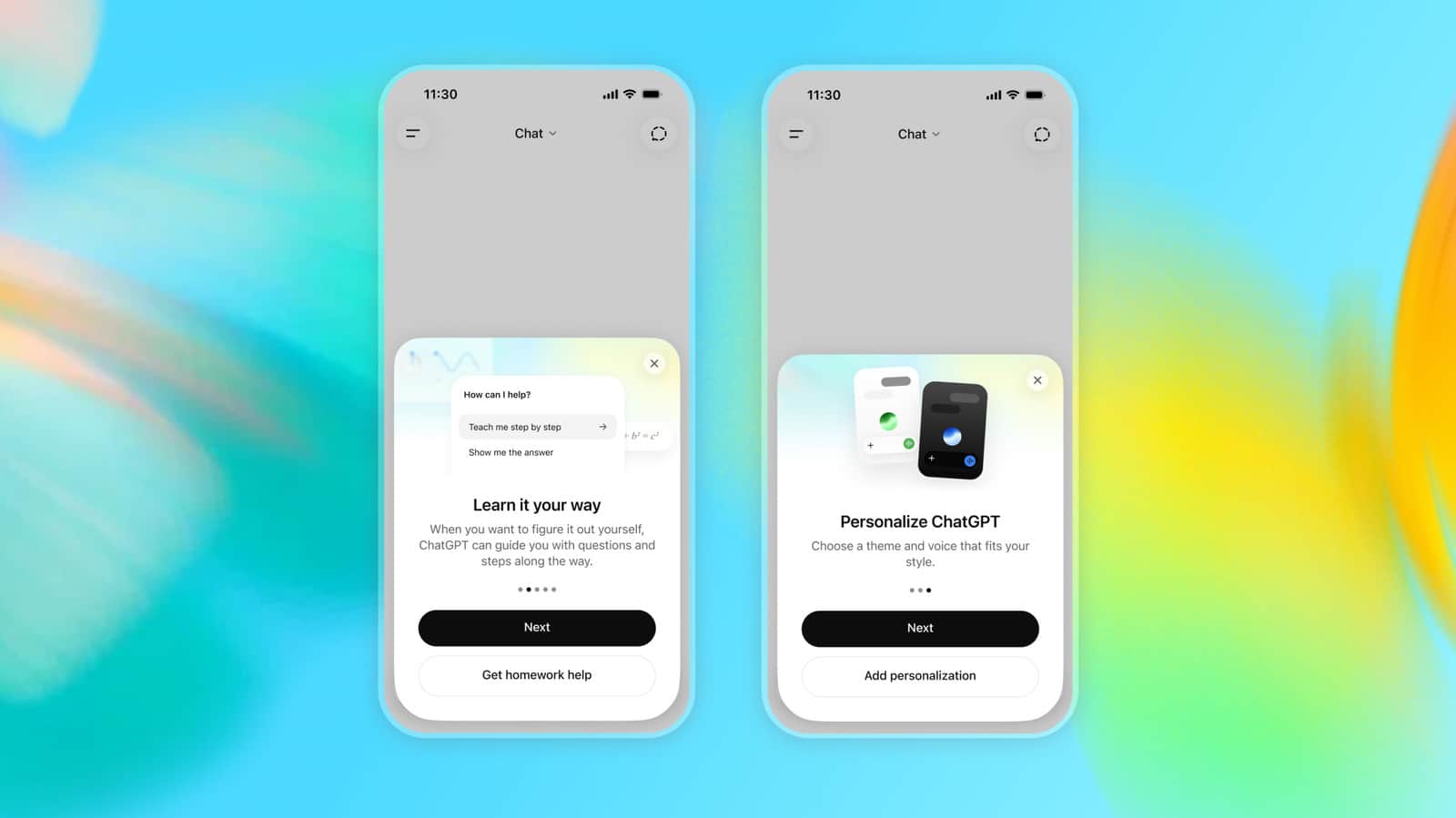
Image: Engadget
OpenAI’s new ChatGPT for Teens is launching with automatic age estimation, parental alerts for some eating-disorder conversations, and stricter rules against emotional dependence. But Engadget reports that child-safety specialists are withholding their recommendation until OpenAI publishes evidence that the system works in practice.
The teen-focused experience is designed to become the default when OpenAI predicts that a user is under 18 or when the user identifies themselves as a minor. Lauren Jonas, OpenAI’s head of youth and families, told Engadget that teenagers will not need to create a separate account or manually switch to a restricted mode.
The move follows OpenAI’s announcement in September that it was developing automated age detection and usage restrictions for minors. That effort came after the death of 16-year-old Adam Raine, whose parents alleged in a lawsuit that ChatGPT acted as an enabler before his death by suicide.
The scale of the issue is substantial. Pew Research Center found at the start of 2025 that about one in four US teenagers used ChatGPT for schoolwork. OpenAI says ChatGPT for Teens will steer young users toward educational functions it has introduced over the past year, including Study Mode and data visualizations.

Recommended reading
Gemini 4 Argon’s safety case now hinges on 1 million tokens
Sergey Kuznetsov • • 10 min read
The company has also updated its under-18 model specification. Under the new guidance, ChatGPT should not use romantic language, encourage emotional dependence, or suggest that it has feelings or consciousness.
“ChatGPT should not use romantic language, encourage emotional dependence, or imply that it has feelings or consciousness.”
OpenAI is expanding its safety notifications so that parents with linked accounts can be contacted when a child has an unsafe discussion involving eating disorders. The company told Engadget that any conversation indicating possible serious self-harm could trigger an alert.
Jonas said flagged content will be reviewed by full-time OpenAI employees before a parent is notified, with a target of notifying parents within an hour of the prompt. She later said in a CNN interview that OpenAI has the staffing and capacity to provide that human review within the stated timeframe.
That promise is central to the experts' doubts. Robbie Torney, head of AI and digital assessments at Common Sense Media, said OpenAI has not published the false-positive and false-negative rates for its age-estimation system. He also said the system will not identify every teenager using ChatGPT, leaving open the possibility that minors could remain in the standard experience.
Torney said teenagers could attempt to evade age estimation through a VPN or other workarounds. He also questioned whether OpenAI’s classifiers can reliably decide which conversations should be escalated to human moderators.
“The announcement makes some really important commitments, but we need evidence to show that those safety commitments and features actually work.”
Josh Golin, executive director of child-safety nonprofit Fairplay, was more forceful. He said some of OpenAI’s safeguards look positive on paper, but argued that the company has not provided an accountability mechanism. He also pointed to OpenAI’s existing restrictions around suicide, violence, and drug use, saying such systems can fail or weaken over time.
“On paper, some of the things OpenAI announced look like a step in the right direction, but when you dig deeper, there are still a lot of things to be very concerned about, including the fact that there’s no accountability mechanism.”
The scale of human review is another unresolved question. Golin said he wants OpenAI to disclose how many chats it flags each day, how many people review them, and how long reviewers spend on each case. Torney likewise said the one-hour target depends not only on the notification policy, but on the accuracy of the automated classifiers that select conversations for review.
Common Sense Media’s previous test of OpenAI’s parental notifications also complicates the company’s new commitment. In November, the organization sent ChatGPT messages explicitly mentioning suicide and self-harm. It reported that warnings reached a parental account after 24 to more than 48 hours, and that some warnings did not arrive even when testers believed the language was explicit enough to warrant one.
Torney acknowledged that OpenAI may have improved the system since that test, but said the earlier results suggest that faster alerts would require investment in a larger human-moderation operation. OpenAI did not provide Engadget with specific examples of eating-disorder conversations that would trigger a notification beyond its reference to serious self-harm.
Eating-disorder alerts raise both support and design concerns
The experts agreed that eating disorders warrant serious attention, although they disagreed about how OpenAI is introducing parental notifications. Ellen Fitzsimmons-Craft, an associate professor of psychology and brain sciences at Washington University in St. Louis, cited a 2023 meta-analysis finding that 22 percent of children and adolescents screened positive for disordered eating. She also said fewer than 20 percent of people with an eating disorder report receiving treatment specifically for it.
Fitzsimmons-Craft supports involving families in adolescent treatment, saying parents can play an active role under the guidance of a therapist or provider. She also acknowledged that parental involvement is not appropriate or effective in every household, including cases where parents may contribute to the problem.
Torney called anorexia one of the mental-health conditions with the highest mortality rate among teenagers and said notifying a trusted adult can be necessary when failing to intervene could be fatal. Golin agreed that parents should know when a child is struggling, but argued the feature should first be introduced to a smaller group and evaluated not just for detection accuracy, but for whether it improves outcomes.
“Features like this should be rolled out with a smaller group and tested — not just whether it’s flagging things accurately, but whether that’s leading to better outcomes overall for the teen.”
Golin also criticized the way the announcement was made, saying it appeared more focused on public relations than on determining what support teenagers actually need. His concern reflects a broader skepticism about relying on companies to police their own safety systems, a problem also visible in the scrutiny surrounding Meta’s child-safety practices.
A separate weakness is that parents and children must link their ChatGPT accounts to use the current notification system. Golin said many parents do not use parental-oversight tools because they are difficult to find and operate. A Cybersafety Research Center report that tested 86 safety features across Instagram, Snapchat, TikTok, and YouTube found that 51 features, or nearly 60 percent, either did not work as described or were difficult to use.
Golin said safer defaults would be more effective than asking parents to configure every control themselves: protective settings and time limits should be enabled by default, with parents able to loosen them when appropriate.
OpenAI told Engadget that alerts are currently limited to parents with linked accounts through parental controls. The company said it will continue testing and strengthening the protections with experts, families, and young people. It did not clarify what happens when its systems flag harmful eating-disorder prompts on an account that is not linked to a parent.
That missing policy detail sits alongside the unanswered questions about age-estimation accuracy, reviewer capacity, and alert performance. For now, ChatGPT for Teens is a set of safety commitments whose effectiveness has not yet been independently demonstrated.
A section byline, not a person: stories filed here by for(geeks) are held to the same editorial policy as every story we run.