• 4 min read
Illinois prosecutors shared immigrant data with ICE
Records show prosecutors in one of every six Illinois counties shared addresses, court dates and reports with ICE without warrants or public oversight.
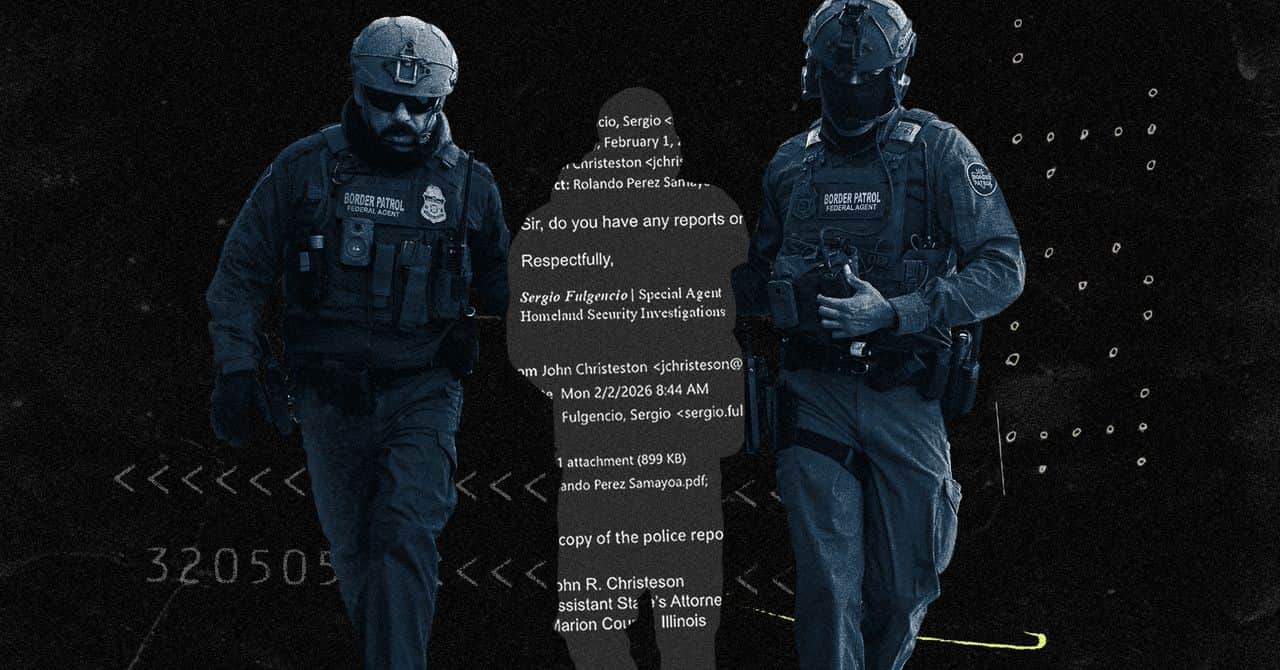
Image: Wired
Prosecutors in one out of every six Illinois counties shared sensitive information about criminal defendants with federal immigration authorities during the first 15 months of President Donald Trump’s second term, an investigation of more than 5,000 pages of records found.
The records show county prosecutors and their staff sending or confirming defendants' names, dates of birth, home addresses, photographs, police reports, tickets and court schedules to Immigration and Customs Enforcement (ICE) and Homeland Security Investigations (HSI). The exchanges generally happened without a federal criminal warrant, public disclosure or notice to the defendants' lawyers.
Illinois' 2017 TRUST Act was designed to keep local law-enforcement agencies from assisting federal deportation operations. The law bars police and other agencies from helping federal agents deport people unless there is a federal criminal warrant. It does not clearly state whether prosecutors and their employees are subject to the same restrictions, leaving a legal opening that federal immigration agents used across the state.
How a DUI case became an immigration lead
Rolando Perez Samayoa came to the United States from Mexico in 2023, seeking safety from violence. He settled in southern Illinois after being told the state offered protections for immigrants and found work cleaning a factory.
After a DUI arrest in Marion County in October, Samayoa attended his court hearings, according to court records. In late January, John Christeson, an assistant state’s attorney handling the case, emailed an HSI agent named Sergio Fulgencio. Christeson included Samayoa’s date of birth, his next court date and his address in Centralia, Illinois.

Recommended reading
Google’s €403M location case gives it six months to comply
Sergey Kuznetsov • • 4 min read
“Ok, we’ll take care of it, thank you.”
Two days later, Fulgencio asked whether the prosecutor had additional records. Christeson sent the police report and related tickets. Three weeks after that exchange, federal agents arrested Samayoa outside his home. His 17-year-old son was taken as well.
The case shows how prosecutors' information could help immigration agents make an arrest. A court date, a scheduled release from jail or a home address can give immigration agents a precise opportunity to make an arrest. The records show prosecutors sometimes volunteered information and sometimes responded to requests from Department of Homeland Security agents.
The information was not limited to immigration status. Emails reviewed in the investigation included photographs, residential addresses and the date and time defendants were due in court or expected to leave custody. People whose information was shared were detained or deported, separating them from their families.
A statewide practice with little accounting
The records came from Freedom of Information Act requests sent to all 102 Illinois state’s attorney’s offices, combined with federal and circuit court records. Eleven offices did not respond; some released documents only after being sued under FOIA. Litigation over the remaining offices is ongoing.
The resulting count may understate the scale of the cooperation. Some messages refer to telephone calls—for example, “Thank you for taking my call”—that would not appear in the written records obtained through FOIA. There was also no statewide accounting of how often prosecutors contacted ICE, which defendants were affected or how many referrals led to arrests, detention or deportation.
The disclosures crossed political lines and involved elected state’s attorneys, prosecutors and paralegals. In many cases, defendants and their attorneys did not know that prosecutors were communicating with federal immigration agencies.
The investigation also found that cooperation was not unavoidable. Dozens of county prosecutors facing the same federal pressure reported no record of contact with ICE. At least one office specifically barred that contact, indicating that the TRUST Act’s ambiguity did not force every office to participate.
The unresolved legal gap
Illinois is one of more than a dozen states that restrict local police and sheriffs from helping with federal immigration enforcement. New York has also adopted limits on such cooperation. But the Illinois records show a weakness in laws written primarily around police and jail operations: prosecutors can possess detailed personal and scheduling information without being explicitly covered by the same prohibitions.
The gap matters as the federal government expands immigration enforcement at workplaces, homes and courthouses. A sanctuary policy may prevent a police department from holding someone for ICE, yet still allow a prosecutor’s office to disclose the information needed for federal agents to find that person.
The records do not establish a complete statewide total, and the unresolved FOIA cases mean the public record is incomplete. They establish that county prosecutors supplied federal immigration agents with personal data—and that the practice operated with little transparency or legislative oversight.
A section byline, not a person: stories filed here by for(geeks) are held to the same editorial policy as every story we run.