• 5 min read
IFA 2026: Anker previews a desktop fabric printer
Anker showed a compact fabric printer at IFA 2026 that supports DTG and DTF, but pricing and a precise launch date remain unknown.
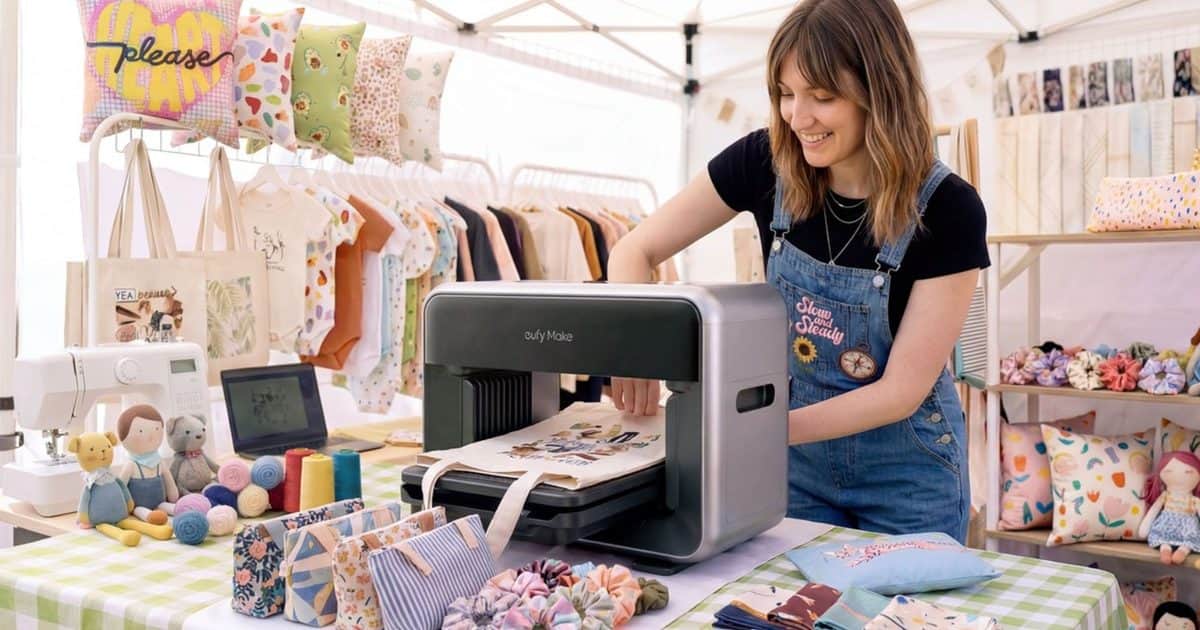
Image: Digital Trends
Anker used IFA 2026 to preview a compact desktop printer designed for custom T-shirts, tote bags, hats, jeans and other fabric goods. The machine supports both direct-to-garment and direct-to-film workflows, but Anker has not yet announced an official product name, price or exact on-sale date.
The company says the fabric printer is planned for Q1 2027, which places its expected launch sometime between January and March 2027. That is the clearest availability information so far; the company has not said whether the printer will launch in the United States at the same time as other markets.
“Professional garment customization used to be locked inside expensive industrial machines. Now, we’re bringing that magic right to your desk with a printer designed specifically for fabric printing.”
Two printing paths, different trade-offs
The machine’s two modes target different production steps rather than offering two names for the same process. Direct-to-garment (DTG) deposits ink directly onto the fabric. That is the more natural fit for T-shirts, where the intended result is a soft and breathable print integrated into the garment.
Direct-to-film (DTF) prints the design onto a transfer film first. The film is then applied to the fabric with a heat press, allowing the same printer to work with a broader range of materials. Anker also says DTF prints can use special-effect films, including gold and silver foil.
Recommended reading
Surface Pro 12, Laptop 13 and haptic mouse cost more
Sergey Kuznetsov • • 9 min read
Both methods can be used on the same garment, but not simultaneously. Anker says the printer is intended to produce consistent colors on both light and dark fabrics, although the company has not published color-accuracy measurements, supported ink colors or the operating conditions behind that claim.
| Mode | Where the design is printed first | Intended advantage | Extra equipment or effect mentioned |
|---|---|---|---|
| DTG | Directly onto the garment | Soft, breathable finish for fabrics such as T-shirts | No transfer film described |
| DTF | Onto film, then transferred to fabric | Works across a wider range of materials | Heat press; gold and silver foil effects |
The design also has a use beyond ordinary garment printing. Anker says the printer can add full-color artwork to pieces that were stitched by a less expensive single-color embroidery machine. That could make the system useful for small businesses that already own basic embroidery equipment but need a way to add color without buying a multicolor embroidery machine.
The hardware shown at the event appears sized for a desk, roughly in the range of a consumer 3D printer, with a large dashboard on its top surface for print settings. Anker has not provided dimensions, print resolution, throughput, maximum garment size, ink capacity or the required heat-press specifications. Those omissions matter for anyone evaluating it for production rather than occasional home projects: DTG and DTF systems can have very different workflow times and space requirements once curing, pressing and garment handling are included.
White-ink maintenance
Fabric printers commonly need careful white-ink management, and Anker says its printer addresses that problem with an intelligent cleaning system. The company says the system monitors the printhead and automatically adjusts maintenance to help prevent white-ink clogs.
Anker has not stated how often maintenance runs, how much ink the cleaning process consumes, whether the system requires user intervention, or whether its white ink uses a different cartridge or circulation design. Until those details are available, the maintenance system is an attempt to reduce a known operating burden, not proof that routine cleaning has been eliminated.
The printer is part of an Anker transition announced at the same event. The company is retiring the eufyMake name and folding its sub-brands under the Anker brand. That change follows the company’s IFA announcement of 22 products, including the MindBase home-security hub, a local-storage system with 48TB of expandable storage, and other former Eufy and Soundcore products. The fabric printer is being introduced during a brand consolidation, not as a continuing eufyMake product line with an established US retail channel.
Existing E1 owners get software and accessory updates
Anker also used the event to update owners of its UV Printer E1. A software update will add bidirectional printing, allowing the single printhead to work in both directions. Anker says that should roughly double print speed without adding hardware, though it has not published a benchmark showing the speed before and after the update or identified which print modes benefit most.
The update will also add an Idea-to-Image workflow. It suggests print settings based on the selected material, with the stated goal of reducing setup time and trial-and-error adjustments. The company describes both upgrades as free software updates for existing E1 owners.
The E1 is also getting a pair of hardware accessories for longer print jobs. Anker plans to launch a Roll-to-Film Attachment in late September 2026, followed by a High-Capacity Continuous Ink Supply System in Q4 2026. The company describes both as tools for longer, higher-volume work, but has not disclosed their prices, capacities or compatibility limits.
| Date | Product change |
|---|---|
| IFA 2026 | Anker previews the unnamed personal fabric printer |
| Late September 2026 | Roll-to-Film Attachment planned for the UV Printer E1 |
| Q4 2026 | High-Capacity Continuous Ink Supply System planned for the E1 |
| Q1 2027 | Personal fabric printer planned for launch |
Price and availability remain unresolved
For US buyers, the missing price is the central issue. The product is aimed at home creators, custom-apparel sellers and small businesses that currently outsource printing, but there is no announced cost for the printer, its inks, transfer films, maintenance supplies or any required heat press. Without those figures, it is not possible to compare the complete setup with a commercial printing service or determine whether the machine is intended for hobby use or low-volume business production.
Anker’s official EufyMake printer preview confirms that the company is presenting the machine as an IFA product, but the public material still stops short of a final name, detailed specification sheet and retail schedule. The missing figures include print speed, consumable costs and the price of keeping white ink usable over time.
Frequently asked questions
When will Anker’s fabric printer launch?+
Anker says the unnamed printer is planned for Q1 2027, meaning January through March 2027. An exact on-sale date has not been announced.
How much will Anker’s fabric printer cost?+
Pricing has not been announced. Anker also has not disclosed prices for its inks, transfer films or any required heat press.
What printing methods does the fabric printer support?+
It supports direct-to-garment printing onto fabric and direct-to-film printing, which transfers a design from film using a heat press.
What is changing on the UV Printer E1?+
A free software update adds bidirectional printing and an Idea-to-Image workflow. Anker also plans a Roll-to-Film Attachment and a high-capacity continuous ink supply system.

Editor-in-Chief
Sergey Kuznetsov is Head of Product at iXBT.com, one of the largest Russian-language technology media outlets, and the founder of itzine.ru. He has spent over a decade building and running tech newsrooms. At for(geeks) he sets editorial standards and reviews what ships.