• Updated • 6 min read
Florida orders Flock cameras off state highway rights of way
Florida’s transportation agency revoked permits for license-plate readers on state highway rights of way, giving agencies 30 days to remove them.
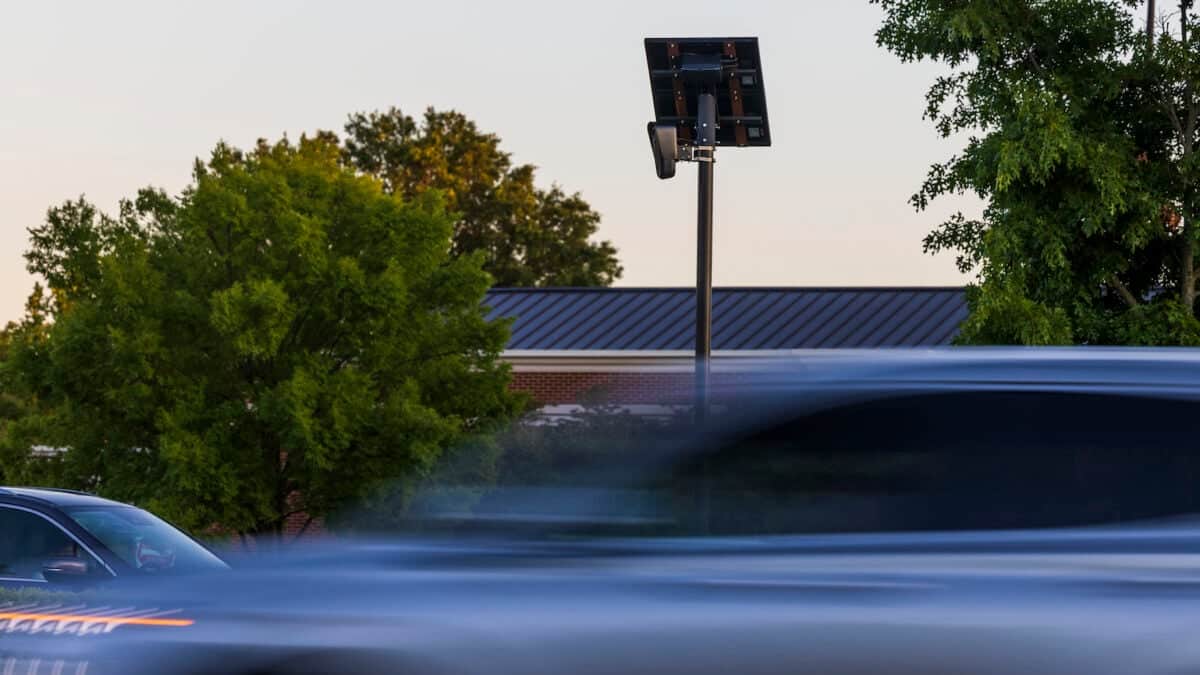
Image: Gizmodo
Florida has ordered law-enforcement agencies to remove license-plate readers from state highway rights of way within 30 days. The order affects Flock Safety cameras but is narrower than claims that Florida is banning the systems statewide.
The directive came in a one-page memorandum signed by Florida Department of Transportation Assistant Secretary Will Watts on August 31, 2026. The FDOT memorandum revokes active permits for automated license-plate readers placed “within the right of way of a road on the State Highway System.” It says agencies have 30 days to remove the devices, after which FDOT may remove them itself.
The memo applies to rights of way on the state highway system, not every camera operated by a Florida police department. It does not say that cameras on private property must be removed, and it does not establish a statewide prohibition on using license-plate-reader data in every location. It also covers license-plate readers generally rather than naming Flock Safety alone.
The order nevertheless triggered immediate shutdowns by several sheriff’s offices. Jacksonville Sheriff T.K. Waters said the Jacksonville Sheriff’s Office would stop using the technology immediately and “fully comply with FDOT’s directive.” Volusia and Jefferson counties also removed their readers, while Brevard County suspended use.
| Agency | Action disclosed on August 31, 2026 | Timing |
|---|---|---|
| Jacksonville Sheriff’s Office | Stopped using license-plate readers | Effective immediately |
| Volusia County Sheriff’s Office | Shut down license-plate readers and removed the devices | Effective immediately |
| Jefferson County Sheriff’s Office | Removed license-plate readers | To comply with the directive |
| Brevard County Sheriff’s Office | Suspended use of the cameras | Effective immediately |
Waters described the technology as useful for investigations but said the state’s action and community concerns changed the practical situation for his agency.
“LPR technology has proven to be an enormously valuable investigative tool, assisting our agency in solving serious crimes and locating missing and vulnerable individuals. However, given the decision made at the state level and the concerns expressed by members of our community, I have determined that discontinuing the use of this technology is the appropriate course of action at this time.”
The memo says the action is intended to “preserve Floridians' sovereignty and quality of life.” It cites “concerning reports of misuse, data privacy concerns, and surveillance schemes” as reasons for immediate action. The directive also says FDOT can remove any individual LPR device immediately if it presents a safety concern or creates an unsafe condition, rather than waiting for the 30-day period to expire.
Why Florida agencies are shutting the systems down now
The order follows scrutiny of how license-plate-reader networks are used, including allegations that officers have used them to monitor people for personal reasons. A Kentucky police officer was arrested in August 2026 over allegations that he used Flock cameras to surveil an ex-girlfriend. The incident added to concerns about access controls, auditability and whether police departments can detect misuse by individual employees.
Florida officials have not presented the memo as the final word on the technology. Governor Ron DeSantis previously said the use of license-plate readers had become “out of control,” while also saying the Florida Legislature would need to approve action to eliminate them. The FDOT directive is an administrative restriction on a specific class of installations, not a replacement for legislation covering data retention, sharing, access or use across the state.
Volusia County Sheriff Mike Chitwood, a prominent supporter of the systems, said the order left his department without a legal framework for continuing to operate them. He argued that the criticism included legitimate privacy and data-sharing concerns, but also said some claims about the technology were inaccurate.
“Effective immediately, we are shutting down License Plate Readers in Volusia County. This is not a decision I take lightly. LPRs have helped us solve violent crimes, saved lives, found missing people, and recovered stolen property. However, recent orders and statements from our Governor and Department of Transportation have made it clear that LPRs are no longer workable in Florida.”
Chitwood said the systems had helped investigators identify suspects in violent crimes, recover stolen property and locate missing people. He also warned that turning them off would affect public safety, while calling for the legislature to establish guardrails and accountability measures rather than leaving agencies to operate under unclear rules.
The result is an immediate operational change with an unresolved legal scope. Agencies that installed readers in state highway rights of way must remove them or risk FDOT removal, but the supplied directive does not settle what happens to readers on county roads, municipal property, private lots or other locations outside that defined right of way.
Flock argues for regulation instead of a ban
Flock Safety said its cameras remain an important investigative tool in Florida and argued that the state should regulate their use rather than eliminate access. The company said its technology had recently helped locate missing children, contributed to the arrest of a murder suspect and assisted with other investigations in the state.
“Rather than banning a critical public safety tool, we support thoughtful legislation and strong privacy, transparency, and accountability guardrails that ensure technology is used responsibly while preserving law enforcement’s ability to use effective tools to keep people safe.”
The dispute is over both where devices may be installed and how the resulting data is accessed and shared. Removing cameras from state rights of way does not by itself answer questions about existing records, databases supplied by commercial partners or access to cameras installed elsewhere.
The policy also puts local departments in a difficult position. Even agencies that believe LPR data helps solve crimes have begun suspending systems because the state has revoked the permits underpinning installations on state roads. Chitwood said the legislature should define the rules before agencies resume using the technology.
For now, Florida’s action is a 30-day removal order for permitted LPR installations on the State Highway System—not a confirmed shutdown of every Flock camera in the state. The broader questions, including whether lawmakers will create statewide privacy and accountability rules, remain unresolved.
Update, 14 September 2026 — Flock cuts standard retention to seven days
The Verge reports that Flock has shortened its standard license-plate-reader data retention period from 30 days to seven days. Individual jurisdictions can still choose longer retention periods under their agreements.
The company has also made case codes mandatory for all searches after previously treating them as optional, and is requiring its Audit Assistance feature, which flags what Flock describes as abnormal queries. Flock CEO Garrett Langley told the outlet the company had been wrong not to require case codes. Agencies can also limit data sharing by query type, such as allowing homicide searches while blocking immigration-enforcement queries.
Frequently asked questions
Is Florida banning all Flock cameras?+
No. The FDOT memo applies to license-plate readers within the right of way of roads on the State Highway System. It does not address every camera operated by local police or cameras on private property.
How long do Florida agencies have to remove the cameras?+
Agencies have 30 days to remove license-plate readers covered by the directive. FDOT says it may remove devices itself and can act immediately when a device creates a safety concern.
Which Florida agencies stopped using license-plate readers?+
The Jacksonville Sheriff’s Office stopped using them immediately. Volusia and Jefferson counties removed their readers, and Brevard County suspended use.
Why did Florida revoke the permits?+
The FDOT memo cites concerns about misuse, data privacy and surveillance schemes, along with an effort to preserve Floridians' sovereignty and quality of life.
A section byline, not a person: stories filed here by for(geeks) are held to the same editorial policy as every story we run.