• 2 min read
AI makes personalized phishing 2.4 times more effective
AI-personalized phishing emails produced 2.4 times more clicks in a 7,741-person field study and cost about $0.03 each.
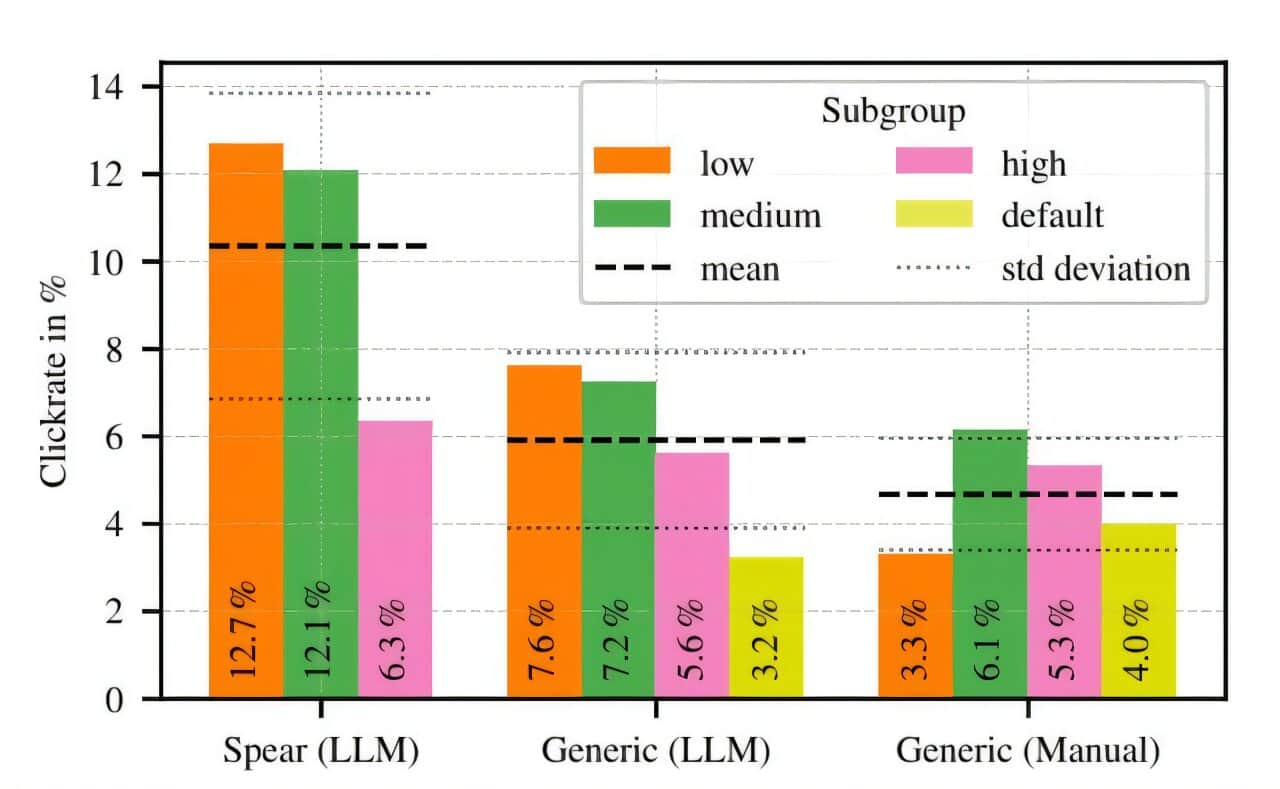
Image: Techxplore
AI-generated spear-phishing emails achieved a 2.4-times higher click rate than generic phishing messages in a field experiment involving 7,741 participants. The automated personalization cost about $0.03 per email, making targeted attacks viable even for criminals with limited budgets.
The findings come from researchers at BIFOLD/TU Berlin, Inria, and Ruhr University Bochum, with the study presented at the USENIX Security Symposium 2026 in Baltimore. Techxplore reported the results on August 11, 2026.
How the experiment measured AI phishing
The researchers compared four types of messages: manually written and AI-generated emails, each delivered in either generic or personalized form. Personalized messages used details such as the recipient’s name, current projects, familiar wording, and a plausible link.
Recommended reading
Phishing-as-a-service has a central kill switch
Sergey Kuznetsov • • 9 min read
Large language models can collect publicly available information about a target and generate a tailored message without human involvement. Human-written phishing still produced the highest click rates, but it cannot match AI-generated messages for speed, scale, or cost.
The reported effect may also understate the threat. The study used only simple, locally run language models, participants knew they were taking part in a security study, and all had already received security training. The researchers said these conditions suggest real-world click rates could be higher with more capable models and less awareness among targets.
Recommended defenses
The study argues that existing defenses are not yet keeping pace with automated personalization. Its recommendations include:
- Limiting how easily personal information can be linked across public online sources.
- Updating security training to include personalized phishing rather than focusing mainly on generic messages.
- Applying account containment and incident-response controls more rigorously, assuming that some accounts will eventually be compromised.
The researchers' work puts a concrete price on a tactic that was previously expensive because attackers had to research each target manually: roughly three cents for every personalized email.
A section byline, not a person: stories filed here by for(geeks) are held to the same editorial policy as every story we run.