• 9 min read
HomeView’s $299 buys a screen, not standalone Siri
Apple’s HomeView makes Siri AI visible in the home, but its personal context and app actions still depend on a compatible iPhone or iPad.
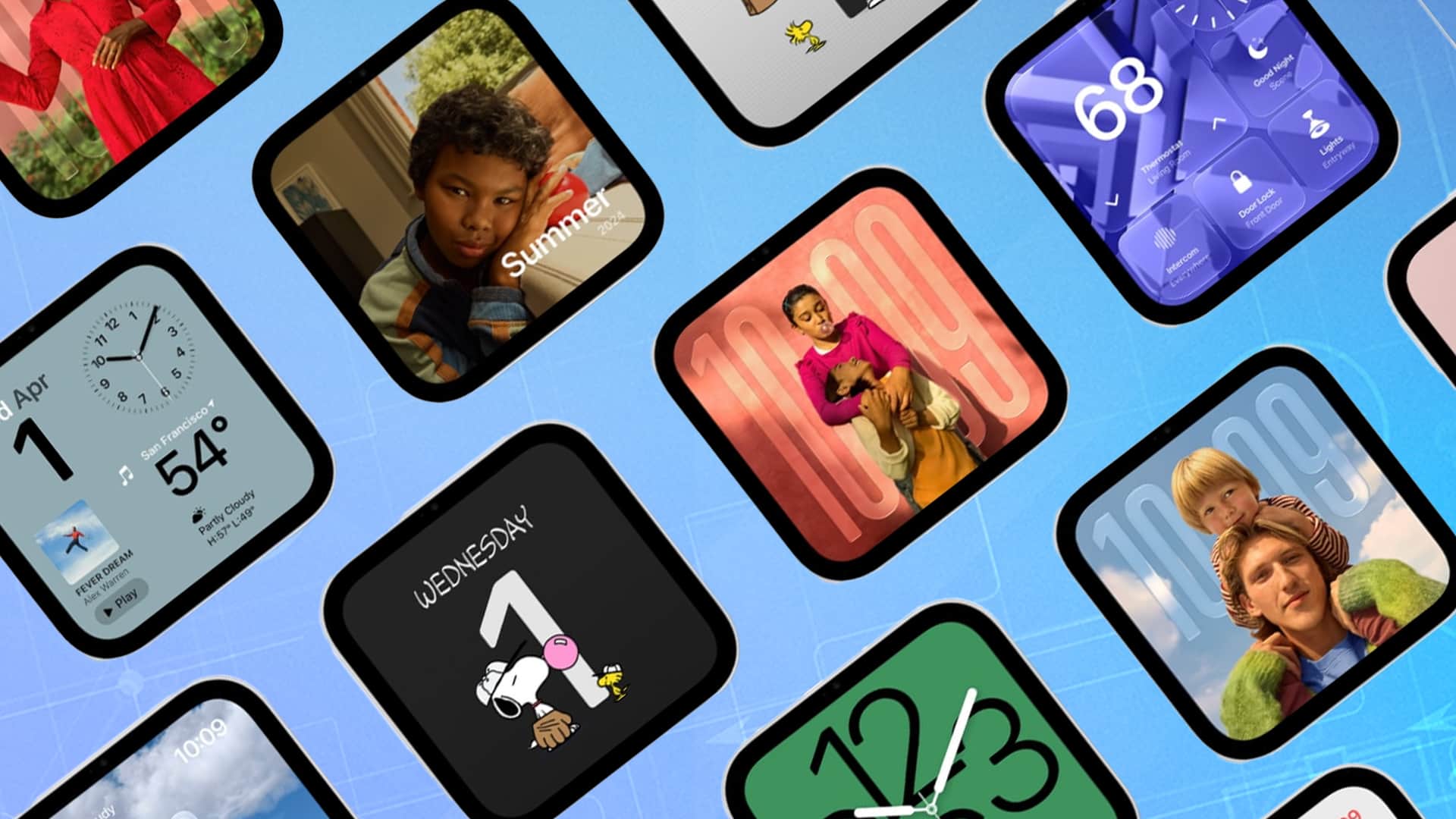
Image: ZDNET
Apple is putting a $299 price on its long-awaited smart display, but the crucial distinction is what HomeView can do by itself. It can answer general questions, conduct Siri AI conversations, play media, run Apple Home controls, and recognize household members. The more consequential Siri features—personal context from Messages and Calendar and actions across apps—require an Apple Intelligence-enabled iPhone or iPad.
HomeView is less an independent household computer than a shared endpoint for an existing Apple device fleet. It is a seven-inch screen, speaker, camera dashboard, FaceTime terminal, and Matter-compatible home hub, but its most personal capabilities remain tied to hardware Apple users already own. Preorders opened on October 13, 2026, and both HomeView variants are due to become available on November 13, 2026.
Apple’s HomeView announcement confirms the split. Siri AI’s general world knowledge and conversational behavior are available even to people without a compatible iPhone or iPad. But requests that access an individual’s calendar, messages, music playlists, or app actions rely on a paired Apple Intelligence-capable device. The same paired-device condition applies to keeping personal material private: HomeView surfaces individual Messages and Calendar content only after recognizing the enrolled user and confirming that their paired iPhone or iPad is nearby and recently unlocked.
That is an authentication boundary for a screen designed to sit in a kitchen or hallway, where anyone walking by can see it. It also means the product differs sharply for an Apple household with current phones and tablets and for someone hoping to buy a standalone Siri appliance.
Two versions, one entry price
HomeView comes in a tabletop model with a domed speaker base and a separate wall-mounted model. Buyers cannot convert one into the other after purchase; the mounting decision happens at checkout. Both cost $299, despite different audio hardware.
Recommended reading
Google Home MCP makes the $20 plan the gatekeeper for rival AI agents
Sergey Kuznetsov • • 10 min read
| Hardware detail | Tabletop HomeView | Wall-mounted HomeView |
|---|---|---|
| U.S. price | $299 | $299 |
| Available colors | Silver, starlight, rose pink, space gray | Silver, space gray |
| Audio system | Two display drivers, down-firing woofer, two force-cancelling passive radiators | Two custom drivers with computational audio for wall placement |
| Physical design | Tilting display on a stainless-steel hinge and speaker base | Display-only unit installed with a Schneider Home mount |
The tabletop version has two full-range drivers in the display, plus the woofer and passive radiators in the base. Apple says its computational audio continuously adjusts loudness and bass response. The wall model retains the seven-inch Liquid Retina screen and the core software features, but its two-driver system is tuned for wall mounting. Apple has not claimed that the wall version includes the tabletop model’s woofer, radiators, or Spatial Audio arrangement.
The screen runs from 0.3 nits to 500 nits, uses True Tone, and changes the density of the interface based on the user’s distance. It shows simpler, larger information from across a room and more detailed controls at close range. Apple describes the device as a household display rather than a personal tablet: it supports up to six recognized people, each with a separate home screen, apps, widgets, and gated access to personal information.
A18 silicon powers HomeView, while the FaceTime camera supports Center Stage. The device can act as an Intercom endpoint, participate in multiroom audio with HomePods and AirPlay speakers, and hand off music from an iPhone by placing the phone in front of the display. Apple also says it can turn web recipes into step-by-step instructions with hands-free timers and ingredient tracking.
The smart-home features have subscription and protocol caveats
As a home dashboard, HomeView can show up to nine camera feeds simultaneously, adjust lights and thermostats, operate locks and blinds, and display a Home Modular control face. It works with Works with Apple Home accessories and Matter devices. Apple is also using the launch to promote Apple Home Collection hardware designed with LG Electronics and Schneider Electric, including cameras, thermostats, and a lock.
HomeKit Secure Video adds more conditions. Camera recognition of people, familiar faces, pets, packages, and vehicles requires compatible cameras and a supported iCloud+ subscription. Apple’s release also says that video descriptions require setup with an Apple Intelligence-enabled iPhone or iPad and an eligible iCloud+ plan. HomeView can display and help summarize camera activity, but it does not remove the requirement for compatible Apple hardware and cloud storage eligibility.
Reports differ on two implementation details that Apple’s own HomeView release leaves unresolved. One account says video descriptions now require a 2TB iCloud+ plan and only HomeView, while Apple’s document instead requires an eligible iCloud+ plan and setup with a compatible iPhone or iPad. Apple’s wording does not name a required storage tier. Reporting also conflicts on Thread: one outlet called HomeView a Thread Border Router, while another said that capability was unclear. Apple’s HomeView announcement confirms Matter support but does not explicitly describe HomeView as a Thread Border Router.
Matter compatibility alone does not establish how a hub will bridge Thread accessories, recover from a Wi-Fi outage, or fit into an existing mixed-protocol installation. Apple says the forthcoming Apple Home Collection products support Thread, but has not used its HomeView release to spell out the hub’s Thread role.
HomeView includes a privacy architecture that Apple describes in more detail than its compatibility claims. Apple says camera and microphone data are processed in isolated Secure Exclaves on the A18, separated from the operating system, apps, the user, and Apple itself. Siri requests can use on-device processing or Private Cloud Compute; Apple says data handled through Private Cloud Compute is neither stored nor accessible to Apple. Those assurances describe data isolation, not an exemption from the iPhone, iPad, or iCloud+ prerequisites attached to personalized and camera-analysis features.
Apple is selling a home stack, not just a display
HomeView arrived alongside a new Apple TV 4K and HomePod mini 2, putting Siri AI at every shared screen and speaker in an Apple household. The devices have different availability and Siri timelines.
| Product | U.S. price | Availability | Key Siri or silicon detail |
|---|---|---|---|
| HomeView | $299 | November 13, 2026 | A18; Siri AI at launch |
| Apple TV 4K, fourth generation | $299 | November 13, 2026 | A19; Siri AI and three far-field microphones |
| HomePod mini 2 | $149 | October 30, 2026 | S10; Siri AI in a future software update |
The fourth-generation Apple TV 4K brings the larger silicon jump. Apple specifies up to 50 percent faster CPU performance and up to 2x faster GPU performance over its predecessor, plus a dedicated AV1 decoder. It has three far-field microphones for hands-free Siri AI, a Siri Remote with Precision Finding, and can pair with four matching HomePod mini 2 or second-generation HomePod speakers for automatically calibrated surround sound.
The HomePod mini 2 separates new hardware from immediate Siri availability. Its S10 chip supports the new assistant, but Apple says Siri AI will come through a future software update rather than on its October 30 release date. At $149, it is also $20 above the previous HomePod mini’s $129 price.
Apple TV 4K has likewise moved up from $199 to $299. The $100 increase is notable because the company raised its price earlier in 2026 as memory costs climbed. HomeView avoids that comparison because it creates a new category for Apple; it is not an inexpensive experiment once required mounts, cameras, cloud storage, and compatible personal devices enter the picture.
The optional wall installation makes the total more variable. Schneider Home’s Power Mount USB-C Wall Connector costs $59.95, the Power Mount AC Wired costs $79.95, and the Power Mount PoE Wired is listed at $129.95 for early 2027. A $299 wall display therefore does not necessarily produce a $299 installed system.
What changed from Apple’s earlier home plans
Apple’s home display has arrived on the early end of the window described in our July report on the rumored HomePad, which said a seven-inch hub could ship between October 2026 and early 2027. The finished product is called HomeView, runs on A18 silicon, and centers on Siri AI rather than a tvOS-based interface.
The company had already been preparing its retail presentation for this shift. Our August reporting found Apple redesigning accessory walls to make room for a display-equipped HomePod-style product, a new Apple TV, and a HomePod mini refresh. That work was retail preparation for a stack that Apple wants buyers to see as connected accessories rather than three unrelated products.
The timing also follows the September 14, 2026, English Siri AI beta launch across Apple’s current operating systems. Our coverage at the time documented the service’s hardware restrictions, server-side caps, and European Union limitations. HomeView does not solve those boundaries. It extends Siri AI into a shared room, but personal-context features still require a compatible device, while video descriptions retain iCloud+ and setup dependencies.
Apple’s own language is direct about the intended division of labor:
“Apple HomeView is designed to be shared by everyone in the home yet feel completely personal to each user.”
That shared-yet-personal model is the product’s central engineering problem. Facial recognition can select a profile, but Apple has added the paired, recently unlocked iPhone or iPad check before it reveals sensitive content. It is a stronger barrier than simply recognizing whoever is standing at the screen, although Apple has not published technical performance data for the face-recognition system or explained its behavior when a user’s paired device is absent.
A useful endpoint, not a Siri escape hatch
The hardware targets Amazon Echo Show and Google Nest Hub-style use cases—ambient information, video calls, music, security feeds, and touch controls—but Apple’s strategy differs. HomeView does not own a user’s identity, context, and app permissions. The iPhone or iPad still owns them. HomeView is the screen and microphone placed where several people can use them.
That may be a better privacy design for a communal display, and it gives existing Apple households a reason to consider it. It is also Apple’s lock-in mechanism: the most useful $299 HomeView experience requires not merely Apple Home accessories, but current Apple Intelligence-capable personal hardware. Apple has provided no independent benchmarks for Siri AI responsiveness on HomeView, no technical explanation of its disputed Thread role, and no final account of which iCloud+ tier unlocks video descriptions. Those details will determine whether the display becomes a reliable home controller or an attractive remote screen for an iPhone that must remain nearby.
Frequently asked questions
When does Apple HomeView ship?+
Apple says HomeView will be available on November 13, 2026. Preorders opened on October 13, 2026.
How much does Apple HomeView cost?+
Both the tabletop HomeView and the wall-mounted HomeView cost $299 in the U.S. Wall installation mounts are sold separately.
Does HomeView need an iPhone or iPad for Siri AI?+
General Siri AI conversations and world-knowledge questions work without one. Personal context, app actions, and individual information from apps require an Apple Intelligence-enabled iPhone or iPad.
Does HomeView support Matter and Thread?+
Apple confirms Matter support. Its HomeView announcement does not explicitly state that HomeView is a Thread Border Router, despite conflicting reports about that capability.

Editor-in-Chief
Sergey Kuznetsov is Head of Product at iXBT.com, one of the largest Russian-language technology media outlets, and the founder of itzine.ru. He has spent over a decade building and running tech newsrooms. At for(geeks) he sets editorial standards and reviews what ships.