• Updated • 7 min read
Meta settles teen safety trial for up to $18 billion
Meta will pay up to $18 billion and impose default time limits, night blocks and parental controls on teen Facebook and Instagram accounts.
Image: BBC News
Meta will pay up to $18 billion to settle claims from US states that Facebook and Instagram harmed children, ending a federal trial in California before the company’s chief executives had to testify further. The agreement also changes the default experience for teen users, including a two-hour daily limit, overnight blocking and stronger parental controls.
The settlement covers California and 28 other states that accused Meta of designing products to maximize engagement despite knowing about risks to young users. The states also alleged that Meta collected data from children under 13 without parental permission, violating federal and state child-privacy laws. Meta denies wrongdoing and does not admit liability under the agreement.
A fully executed copy of the settlement agreement filed with the California attorney general sets the legal framework for the changes. The settlement is described as court-approved in some accounts, while other reporting says it remained pending judicial approval; Judge Yvonne Gonzalez Rogers approved the agreement according to the reported court order.
“Today, we have secured a settlement with Meta that will make social media less dangerous for our kids and make a world of a difference for children and their families.”
What changes for teen Facebook and Instagram users
The agreement requires Meta to apply a default two-hour daily time limit across Facebook and Instagram. Teens will receive prompts after every 15 minutes of continuous use, plus alerts after 60 and 90 minutes of cumulative use. Turning off the limit will require parental permission.
Recommended reading
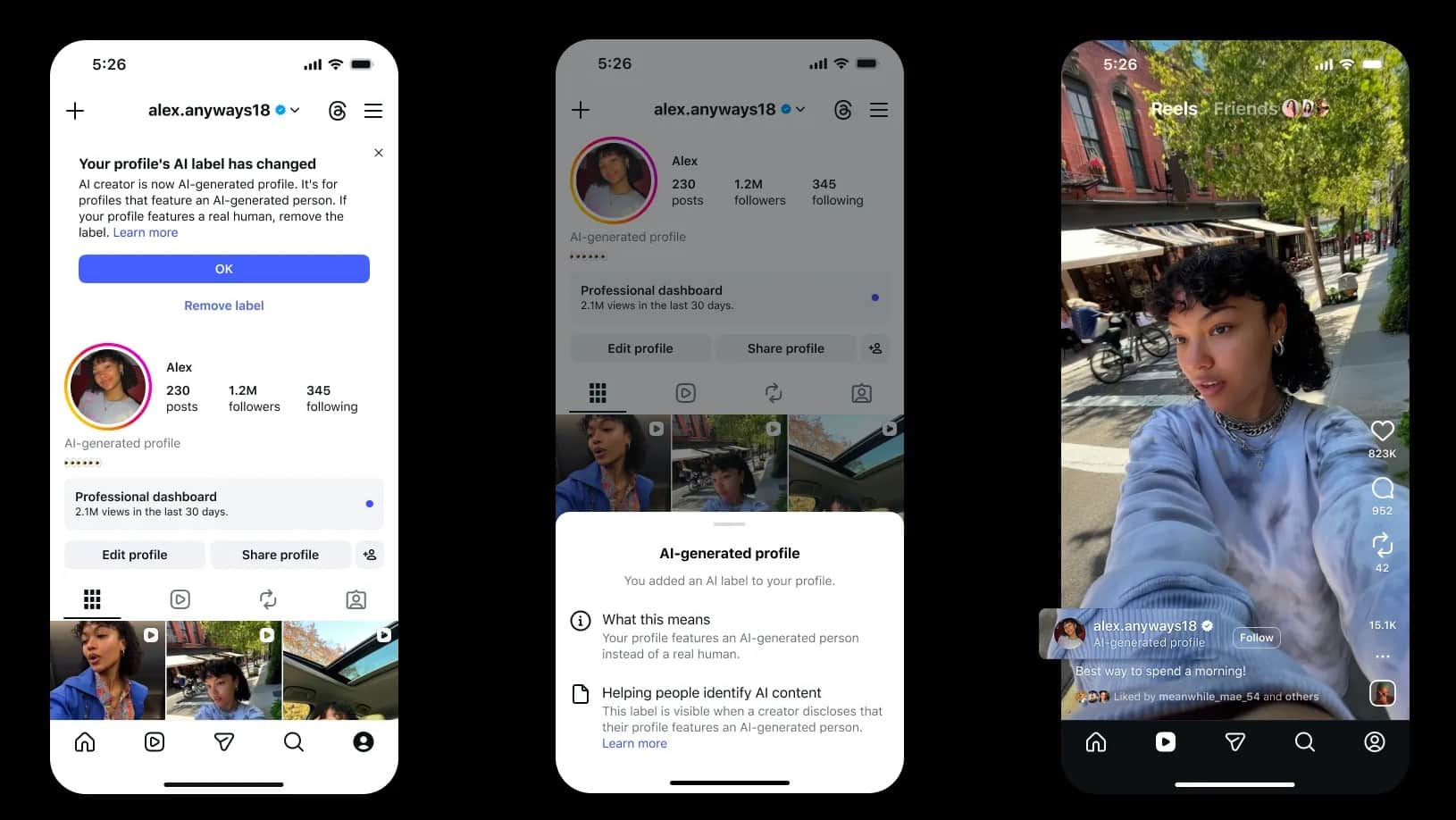
Instagram will demote undisclosed AI influencer accounts
Gaming & Internet Desk • • 5 min read
The limit has a significant exception: direct messaging is not included, allowing teens to continue communicating without that activity counting toward the cap. Long-form audio or video content—defined in the settlement reporting as content lasting at least 22 minutes—is also excluded from the time limit. That leaves open how much time a teen could spend in messaging or long-form content while still complying with the headline two-hour restriction.
Meta must enable Night Mode by default, blocking teen access from midnight to 6 a.m. The setting is intended to be controlled by a parent or guardian. School Mode will mute notifications from 8 a.m. to 3 p.m. on school days, from August 15 through June 15.
Other defaults and restrictions include hiding likes and reactions on teen users' posts and on posts they view, disabling autoplay, and allowing parents to select a chronological feed instead of an algorithmically ranked one. Meta will also block extreme makeup filters and cosmetic-surgery filters for teens.
The company has agreed to improve parental supervision tools, respond more quickly to harmful-content reports from teens, and expand age-assurance systems designed to identify accounts belonging to children under 13 or teens who registered with an adult birth date. Teen accounts are already private by default, but the settlement calls for measures to prevent adults from finding, following or interacting with them.
An independent auditor will be able to raise concerns with state attorneys general. Meta will also be barred from making further false, misleading or deceptive statements about its safety features.
The payout has two reported ceilings
The financial terms vary across the supplied accounts. The settlement is described as worth up to $18 billion, with payments distributed to states over 10 years. One breakdown says roughly 30%—about $5.3 billion—is contingent on other major platforms adopting comparable safeguards. Under that structure, Meta would pay about $12.7 billion regardless, while the remaining amount depends on action by YouTube and TikTok.
Another account puts the maximum at $16.7 billion, with around $12.7 billion guaranteed and the remainder conditional. The difference is material: the guaranteed portion is consistent, but the sources disagree on the maximum exposure. The conditional payment would require Snap, TikTok and YouTube to adopt a one-hour daily limit, a comparable overnight block and age-assurance measures; those companies would also have to make a matching payment tied to the outstanding amount.
Meta said it will record a $10 billion legal expense in the third quarter of 2026, affecting expenses and profit. The payment itself will be made in annual installments over the 10-year period.
California could receive between $1.5 billion and $2.1 billion, while Colorado is expected to receive about $615 million. The precise distribution depends on the final settlement terms and the conditional component.
“Because teens move fluidly across dozens of apps, we need an industry-wide solution. We therefore call on our industry peers, TikTok and YouTube, to implement this new framework, right away.”
Meta settled before the evidence reached a jury
The case began as a 2023 lawsuit brought by 29 states. The trial was expected to last 19 days, but the settlement came after only several days of proceedings and shortly before Instagram head Adam Mosseri was expected to return to the witness stand. Meta CEO Mark Zuckerberg had been listed as a potential witness but did not testify.
State attorneys presented internal research, employee emails and chat logs as evidence that Meta knew young users were on its platforms and that safety features had low adoption. One internal Instagram research document said, “Teens have an addict’s narrative about use.” A former Meta researcher testified that a team working on safety features had been told not to focus too heavily on adoption figures because it partly existed to protect the company from upcoming lawsuits.
The evidence also highlighted the gap between available safety controls and whether teens actually used them. A feature called Take a Break had been activated by less than 1% of Instagram’s weekly teen users months after launch and by only 1.8% two years later. Quiet Mode, another usage-limiting feature, had similarly weak uptake.
The agreement shifts several controls from optional tools into defaults. Parents and teens no longer have to discover and enable features such as nighttime blocking, school-hour muting or time limits. Whether those defaults reduce harm will depend on enforcement, parental control over exceptions and how much activity falls outside the daily cap.
Meta has faced separate child-safety losses. Our coverage of the New Mexico child-safety judgment described a $567 million order against the company, while the settlement reporting characterizes that New Mexico case as involving nearly $1 billion in combined fines. New Mexico was not part of this nationwide settlement.
The agreement addresses Facebook and Instagram, not the broader social-media market. Meta is pressing TikTok, YouTube and Snap to adopt the same restrictions, but the supplied reporting does not establish that those companies have accepted them. Until they do, Meta’s own payment can remain below the headline maximum and teens can still move to services outside the settlement’s default controls.
Update, 24 September 2026 — Judge challenges Meta’s privilege redactions
The Verge reports that US District Judge Yvonne Gonzalez Rogers found some of Meta’s attorney-client privilege redactions “entirely inappropriate” in an order issued last month. The judge cited a redacted discussion of whether to publish data, concluding that the reluctance to publish material was a business decision to avoid leaks rather than a request for legal advice.
The report also says Meta de-designated roughly 65,000 documents that had been withheld or redacted in April 2025, after discovery had closed. Meta has asked for time through the end of 2026 to re-review additional privilege redactions; plaintiffs' lawyers are seeking a neutral reviewer, paid by Meta, to handle that work.
A section byline, not a person: stories filed here by for(geeks) are held to the same editorial policy as every story we run.